How to Build a Succulent Terrarium Step by Step
This post contains affiliate links. As an Amazon Associate we earn from qualifying purchases, at no extra cost to you.
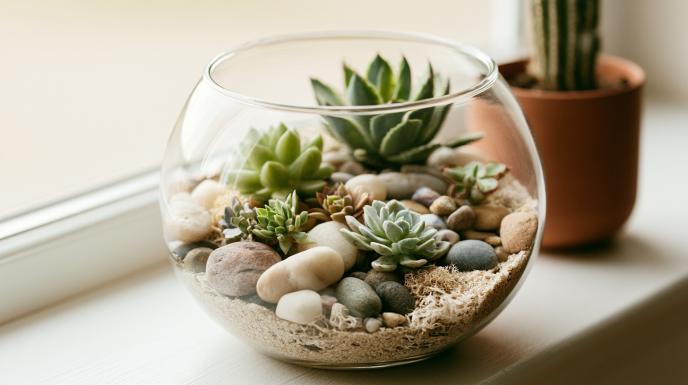
A succulent terrarium is one of the most beautiful and forgiving small-space gardens you can create. These self-contained little worlds — plants and soil nestled in glass, requiring almost no watering and very little attention — are perfect for apartments, desks, shelves, and windowsills. And once you understand the simple principles behind building one that lasts, the process is genuinely enjoyable. Here’s a complete step-by-step guide.
Why Succulents Are Perfect for Terrariums
Not all plants suit terrarium life — many need good drainage and airflow that enclosed glass doesn’t provide. Succulents are the exception. They’ve evolved to store water in their leaves and thrive in dry, well-drained conditions, which is exactly what an open terrarium provides. They grow slowly, staying at a manageable size for months or years, and come in an extraordinary variety of shapes, colours, and textures — rosette forms, trailing varieties, geometric columnar types — making it easy to create a visually interesting composition in a small container. They also handle the lower humidity of indoor environments much better than tropical plants.
The golden rule: always use an open container for succulents. Closed terrariums trap moisture and create conditions that quickly rot succulent roots. Open bowls, open-top geometric frames, and wide-mouthed jars are all ideal.
What You’ll Need
- An open glass container: A wide glass bowl, a geometric terrarium frame, a large jar with the lid removed, or any clear open vessel. Bigger openings give you more design freedom and better airflow.
- Small pebbles or gravel: For the drainage layer. Aquarium gravel or decorative pebbles work perfectly.
- Activated charcoal: Optional but strongly recommended. Keeps the soil environment fresh and filters out any bacteria that could build up in the confined space. Available in small bags at garden centres or online.
- Cactus and succulent potting mix: Essential. Regular potting compost retains too much moisture. A dedicated cactus mix drains quickly and prevents root rot.
- Small succulents (3–5 for a medium bowl): Choose a mix of heights, shapes, and textures for the most interesting composition.
- Top dressing: Decorative sand, fine gravel, small pebbles, or tiny stones to finish the surface.
- Optional extras: Small crystals, shells, driftwood pieces, miniature figurines, or fairy garden accessories to personalise the scene.
Choosing Your Succulents
Visit a garden centre or browse online for small succulent varieties. Here are reliable choices for terrarium building:
- Echeveria: Classic rosette forms in grey-green, purple, pink, and blue. Beautiful and slow-growing.
- Haworthia: Architectural, striped leaves. One of the most tolerant of lower light — a good choice if your spot isn’t very bright.
- Sedum: Many compact varieties with tiny leaves and interesting textures. Some trail, which looks lovely over the edge of a container.
- Sempervivum (Hens and Chicks): Hardy, compact rosettes that produce offsets you can pot on separately.
- Aloe (small varieties): Spiky, architectural, and interesting at any scale.
- Crassula: Many varieties, including the classic jade plant. Look for compact forms like ‘Baby Jade.’
For the most pleasing result, choose plants with a variety of heights (one taller “thriller,” a couple of medium “fillers,” and one low or trailing “spiller”), and pick colours that complement each other — mixing blue-green, grey-green, and purple tones often looks particularly striking.
Step 1: Add the Drainage Layer
Because your container has no drainage hole, the first layer performs that function. Pour pebbles or gravel into the bottom of your container to a depth of about 1–2 inches. This creates a space for any excess water to drain away from the roots, where it can slowly evaporate rather than sitting against the soil and causing rot. Wash the pebbles first if they’re dusty, so the glass stays clear.
Step 2: Add Activated Charcoal
Sprinkle a thin layer of activated charcoal — about half an inch — over the pebbles. This step is optional but worthwhile. Charcoal acts as a natural filter, neutralising any bacterial buildup that occurs in the closed soil environment and keeping things fresh. It’s inexpensive and available in small bags designed for terrariums.
Step 3: Add the Potting Mix
Pour cactus and succulent potting mix on top of the charcoal layer. Aim for 2–3 inches of depth — enough for roots to establish comfortably. Leave some headroom at the top of the container so plants sit below the rim and the finished surface has room for a decorative top dressing. Lightly firm the soil with your fingers or the back of a spoon.
Step 4: Plant Your Succulents
Before planting, hold your succulents in position over the container and experiment with the arrangement. Taller plants usually look best toward the back or centre; lower, trailing, or spreading varieties toward the front and edges. Once you’re happy with the composition, gently remove each plant from its nursery pot, shake off excess soil, and loosen the roots slightly if they’re tightly compacted.
Use a small spoon, a chopstick, or your finger to make a hollow in the soil, nestle the plant in, and firm the soil around the base. Leave a little space between plants — they’ll fill in as they grow, and too-crowded plants have less airflow and more risk of disease.
Step 5: Add the Top Dressing
Pour fine gravel, decorative sand, or small stones around the base of the plants to cover the bare soil surface. This finishing layer makes the terrarium look polished and complete, helps reduce moisture loss from the soil surface, and discourages any moss or algae from establishing. Use a small brush or a folded piece of paper to guide the top dressing around delicate plant stems.
Step 6: Decorate (Optional but Fun)
This is where you add personality. Tuck a small crystal between plants, add a piece of driftwood or smooth stone for texture, place a tiny figurine on a “rock,” or add a miniature fairy garden accessory that suits your theme. Keep decorative pieces in proportion to the plants — oversized accessories break the miniature illusion. A few carefully chosen details are always more effective than many cluttered ones.
Care: Keeping Your Terrarium Healthy
Light: Place your terrarium in bright, indirect light. A spot near a window that gets good natural light for several hours a day is ideal. Avoid harsh direct sun through glass — it can magnify and scorch the plants surprisingly quickly.
Watering: This is where most succulent terrariums go wrong. Water very sparingly — typically once every 2–3 weeks in summer, once a month or less in winter. When you do water, use a small watering can with a narrow spout and aim at the base of the plants, not the leaves. Water until the pebble layer is just damp, then stop. Wait until the soil has completely dried out before watering again. In a terrarium, it’s almost always better to underwater than overwater.
Cleaning: Wipe the glass inside and out every few weeks to keep it clear. Use a long cotton swab or small cloth on a stick to reach inside narrow containers.
Repotting: Succulents grow slowly, but eventually they’ll outgrow their space. When a plant looks crowded, remove it carefully, pot it on separately, and replace it with a smaller new plant in the terrarium.
A Tiny Garden That Lasts
A well-built succulent terrarium is one of the lowest-maintenance displays you can own. With good light, infrequent watering, and a little care with the soil layers, it will stay beautiful for months — often years — with almost no attention. Build one for your desk, your windowsill, or as a gift, and you may find yourself making more. They’re genuinely addictive little worlds.