Best Indoor Plants for Cleaner Air at Home
This post contains affiliate links. As an Amazon Associate we earn from qualifying purchases, at no extra cost to you.
Indoor plants do far more than look good. They add life, texture, humidity, and a quality of calm to a room that’s genuinely hard to replicate with any other kind of décor. And while the science on plants “purifying” air is more nuanced than early studies suggested, there’s no doubt that living with houseplants contributes to lower stress, improved mood, and a more pleasant indoor environment. If you want plants that are easy to care for, long-lasting, and genuinely beneficial to the feel of your home, here are the best choices — and how to look after them.
What Indoor Plants Actually Do for Your Home
The most celebrated claim — that houseplants remove toxins from indoor air — is real, but the scale is modest in a typical home. Where plants genuinely make a difference is in humidity, noise absorption, and psychological wellbeing. Studies consistently show that people working or living in plant-filled spaces report lower stress, better concentration, and greater feelings of calm. For apartment dwellers especially, where outdoor green space may be limited, indoor plants offer an important connection to nature that has measurable effects on mood and mental health. They also add moisture to dry air (particularly helpful in winter with heating on), soften hard acoustic surfaces, and visually break up the monotony of furniture and walls.
The Best Easy-Care Indoor Plants
Snake Plant (Sansevieria / Dracaena trifasciata)
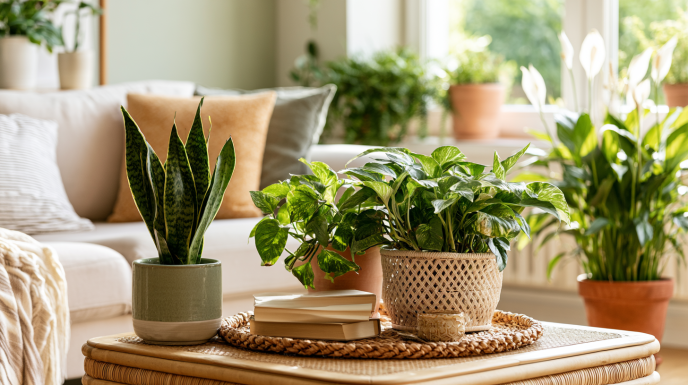
Arguably the most forgiving houseplant in existence. Snake plants tolerate low light, irregular watering, and temperature fluctuations that would kill most other plants. Their upright, architectural form works well in corners and narrow spaces. They release oxygen at night rather than during the day — making them particularly popular for bedrooms. Water once every 2–4 weeks, or even less in winter. Truly almost impossible to kill.
Pothos (Epipremnum aureum)
A trailing vine with heart-shaped leaves that grows enthusiastically in almost any conditions. Pothos tolerates low light better than most plants, making it ideal for rooms away from windows. It grows quickly, looks beautiful trailing from a high shelf or hanging basket, and can be propagated endlessly in water — snip a stem, place it in a glass of water, and it roots within weeks. Water when the top 2 inches of soil feel dry.
Spider Plant (Chlorophytum comosum)
One of the cheeriest and most reliable houseplants. Spider plants produce long, arching leaves with a central stripe and dangle small “spiderette” plantlets on long runners — you can pot these up and give them away or expand your own collection. They’re non-toxic to pets, tolerant of occasional neglect, and happy in a wide range of light conditions. Excellent for bathrooms with some natural light.
Peace Lily (Spathiphyllum)
One of the few flowering houseplants that genuinely thrives in low light. Peace lilies produce elegant white blooms against glossy dark green leaves and are excellent at absorbing moisture from the air. They communicate clearly when they need water — leaves droop noticeably when the soil is dry, then perk up within hours of watering. Note: they are mildly toxic to cats and dogs, so keep them out of reach if you have pets.
ZZ Plant (Zamioculcas zamiifolia)
Perfect for genuinely dark rooms or forgetful waterers. The ZZ plant stores water in its thick rhizomes and can go weeks — sometimes months in winter — without water. Its glossy, deep green leaves look naturally polished and healthy even with minimal care. Grows slowly but steadily, and rarely needs repotting. A truly low-maintenance choice.
Aloe Vera
A succulent that doubles as a first aid kit. The gel inside aloe leaves soothes minor burns, sunburn, and skin irritation — useful to have in a kitchen. Aloe needs bright, indirect light and very infrequent watering (once every 3–4 weeks in winter). Let the soil dry completely between waterings. It thrives on neglect and rewards low attention with years of healthy growth.
Rubber Plant (Ficus elastica)
A statement plant with bold, glossy leaves in deep green or burgundy. Rubber plants grow into impressive floor plants over time and look sculptural even when small. They like bright indirect light, moderate watering, and benefit from having their leaves wiped clean monthly to keep them glossy. Easy to care for once established.
Best Plants for Specific Situations
- Low light rooms: Snake plant, ZZ plant, pothos, peace lily, cast iron plant
- Bathrooms: Spider plant, peace lily, ferns, pothos (love humidity)
- Bedrooms: Snake plant, aloe vera, lavender (also calming)
- Small spaces: Pothos (trailing), spider plant, ZZ plant, aloe vera
- Pet-safe options: Spider plant, calathea, parlor palm, Boston fern
Essential Care Tips for Healthy Houseplants
Overwatering kills more houseplants than anything else. Before watering, always check the soil — push your finger 1–2 inches in. If it feels damp, wait. If it’s dry, water thoroughly until it drains from the bottom. Empty the saucer 30 minutes later so the plant isn’t sitting in water.
Wipe leaves regularly. Dusty leaves can’t photosynthesise as efficiently and are more vulnerable to pests. A monthly wipe with a damp cloth keeps plants healthy and looking their best.
Feed during the growing season. Most houseplants need light feeding from spring through summer. A balanced liquid houseplant fertiliser applied once a month is sufficient for most species. Reduce or stop feeding in winter when growth slows.
Rotate your plants. Turn pots a quarter-turn every week or two so all sides get equal light and the plant grows evenly rather than leaning toward the window.
Start with One and Build From There
You don’t need a jungle to feel the benefits of indoor plants. Start with one or two forgiving choices — a snake plant and a pothos are an excellent beginning — and get into a simple watering rhythm. Once those are thriving, add another. Before long, you’ll have a home that feels genuinely alive, calmer, and more beautiful in every room.