How to Make a Woodland Fairy Garden: A Miniature Forest for Any Small Space
Most fairy gardens are sunny, colorful little worlds. A woodland fairy garden goes the other way — cool, green, and quietly enchanting, like a corner of an old forest shrunk down to fit on a shady doorstep. Instead of flowers, you build the scene from moss, tiny ferns, mossy bark, and a winding path that disappears under the leaves. It is one of the easiest miniature gardens to get right, because the plants that suit it actually prefer the shady, damp spots where nothing else wants to grow. If you have a balcony that never sees direct sun or a gloomy back step, this is the project for it.
Choosing the right container
A woodland scene looks best in something low and wide, which gives you room to lay out a forest floor rather than a single plant in a pot. A shallow bowl, a wooden crate lined with plastic, an old drawer, or a broad terracotta pan all work beautifully. Depth of four to six inches is plenty for the little plants you will use.
Whatever you choose, it must drain. Woodland plants like moisture but rot in standing water, so drill or check for holes in the base and add a thin layer of grit or small stones before the soil. If the container will sit somewhere you cannot let water run out, use a removable plastic liner you can lift and empty.
The soil and the forest floor
Fill the container with a peat-free multipurpose compost, ideally mixed with a handful of leaf mould or fine bark if you have it — that is what real woodland soil is made of. Firm it gently and shape it a little: a low mound in one corner and a dip for the path gives the scene depth and stops it looking flat.
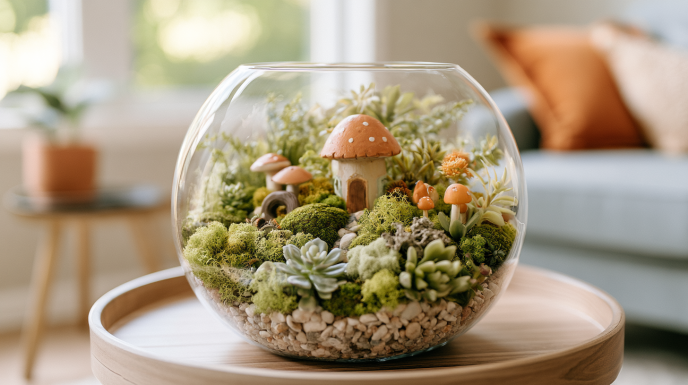
The forest floor is where a woodland garden comes alive. Press sheets of moss over the bare soil, tucking the edges down so they knit in. Add a few pieces of mossy bark, a small twig “fallen log,” and a scatter of tiny pebbles or acorn cups. These natural props do more for the woodland feeling than any shop-bought ornament.
The best plants for a shady miniature forest
Scale is everything, so choose slow, small-leaved plants that will not swamp the scene. Reliable choices include baby’s tears (Soleirolia) for a spreading green carpet, small ferns like miniature button fern, mind-your-own-business, and low creeping plants such as Selaginella or golden club moss. A single tiny-leaved ivy trained over a log looks like a forest vine.
If you want a “canopy,” a small hardy fern or a rooted cutting of a dwarf conifer gives height at the back. For a touch of shade-loving foliage nearby — in the container or in a pot beside it — nothing beats the bold leaves of hostas grown in pots, which echo a woodland look at full size. Keep the miniature plants themselves small and trim anything that races ahead.
Adding the magic: paths, bridges, and tiny details
A path is what turns a planted bowl into a story. Lay a curving trail of fine gravel, crushed bark, or flat pebbles that vanishes behind the moss mound, so the eye imagines it carrying on. A little bridge over a “stream” of blue glass pebbles adds instant charm — the same trick that makes full miniature scenes work, as in these fairy garden pathways and bridges.
Keep ornaments few and natural for a woodland mood: a tiny wooden door tucked against the log, a toadstool or two, a miniature lantern, a small deer or hedgehog figure half-hidden in the ferns. Restraint is what separates a magical woodland from a cluttered one. Leave gaps of open moss so the planting can breathe and the scene feels like a real, quiet forest.
Where to keep it and how to care for it
This is the one miniature garden that thrives out of the sun. Bright, indirect light or dappled shade is ideal; direct midday sun will scorch the moss and dry the ferns to a crisp. A north-facing balcony, a shaded windowsill, or a sheltered porch is perfect.
The golden rule is keep it damp, never soggy. Mist the moss every day or two with a spray bottle and water the soil lightly when the surface starts to dry. Moss draws its moisture from the air as much as the ground, so misting is what keeps it green. Pinch back any plant that outgrows its neighbors, lift out fallen leaves before they rot, and refresh a tired patch of moss whenever you find a fresh piece on a walk.
A calm project for a shady corner
A woodland fairy garden asks for less light, less color, and less fuss than almost any other miniature scene — and rewards you with something genuinely soothing to look at. It brings the hush of a forest floor to a balcony, a shelf, or a shady step, and it changes gently through the seasons as the moss deepens and the ferns unfurl. If you have been staring at a gloomy corner wondering what could possibly grow there, this is your answer. Gather a handful of moss, a shallow bowl, and a few tiny ferns, and build yourself a small forest to escape into.