Fairy Garden Kits for Beginners: The Best Ready-to-Go Sets to Start Today
Making a fairy garden from scratch is a joy, but it can also feel like a puzzle when you are just starting out. Which plants? What size figurines? Where do you even buy a tiny bridge? This is exactly the gap a fairy garden kit fills. A good kit gathers the little houses, figures, fences, and finishing touches into one box, so you can skip the guesswork and go straight to the fun part: arranging your own tiny magical world.
If you have been curious about fairy gardening but did not know where to begin, a kit is the gentlest possible on-ramp. Here is what goes into a good one, how to choose among them, and how to turn a boxed set into something that feels truly your own.
What Is a Fairy Garden Kit?
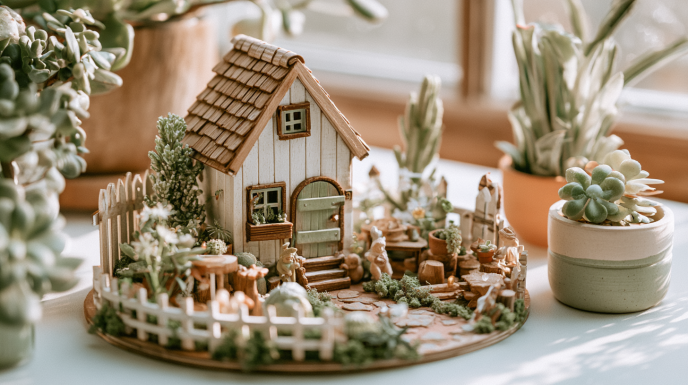
A fairy garden kit is a curated collection of miniature accessories designed to be arranged together into a small enchanted scene. Most kits are built around a theme and include a mix of the essentials: a little house or cottage, one or two fairy figurines, some fencing or a gate, a path or stepping stones, and a few decorative extras like a tiny wheelbarrow, a bench, or a signpost.
Some kits also come with a container and even the growing medium, while others assume you will supply your own pot and plants. The beauty of a kit is that everything is scaled to match, so you never end up with a house that dwarfs your fairies or a fence that towers over the door. For a beginner, that built-in sense of proportion is worth a great deal.
Why Start With a Kit Instead of Buying Pieces Separately
You can absolutely build a fairy garden by hunting down each piece individually, and many hobbyists eventually do exactly that. But there are real advantages to starting with a kit.
First, everything matches in scale and style, so your first garden looks intentional rather than thrown together. Second, a kit is usually cheaper than buying the same number of pieces one at a time. Third — and most importantly for a nervous beginner — a kit removes the fear of getting it wrong. You are handed a coordinated set and simply invited to play. Once you have made one garden and caught the bug, you will have a much clearer idea of the individual miniature garden furniture and accessories you want to collect next.
Types of Fairy Garden Kits
Kits come in a few broad styles, and knowing the differences helps you pick one that suits you or the person you are buying for.
Complete container kits include a pot or planter along with all the accessories, and sometimes soil and plants too. These are the most beginner-friendly because there is nothing else to buy. You open the box and build.
Accessory-only kits give you the miniatures — houses, figures, fences, and trinkets — but leave the container and plants to you. These are great if you already have a shallow bowl, an old teacup fairy garden idea in mind, or a broken pot you want to repurpose.
Themed kits build everything around one idea — a woodland glade, a beach scene, a gnome village, or a glowing solar-light garden. Themed kits make a wonderful gift because the story is already told; you just bring it to life.
Kids craft kits are simpler and sturdier, often with paint-your-own houses or figures. They are designed for little hands and short attention spans, and they turn a rainy afternoon into a project.
What to Look For in a Good Kit
Not all kits are created equal, so a few checks will help you choose well. Look at the number and quality of pieces — a handful of well-made items beats a big box of flimsy plastic that fades in the sun. Check the scale, ideally around one inch to one foot, so the pieces work together. If the garden will live outdoors, make sure the accessories are weather-resistant resin or sealed metal rather than paper or unfinished wood.
It also helps to pick a kit that leaves a little room to grow. The best beginner sets give you a strong foundation — a house, a fairy, a path, a fence — while still inviting you to add your own plants and finds. That balance keeps the project feeling personal rather than paint-by-numbers.
Adding Plants to Your Kit
Most kits supply the accessories but not the greenery, and plants are what make a fairy garden feel alive. For a beginner, the easiest choices are small, slow-growing plants that stay in scale. Baby’s tears, mini ferns, and dwarf mosses give a lush woodland feel, while tiny succulents suit a sunny, low-water scene. Aim for two or three small plants rather than one big one, and leave open “ground” for your paths and figures.
Keep the plants trimmed so they stay proportional to your little house. Part of the ongoing pleasure of a fairy garden is this gentle tending — a snip here, a rearranged pebble there — that keeps the scene looking cared for.
Making a Kit Your Own
The secret to a fairy garden that does not look like it came straight out of a box is to add a few personal touches. Tuck in a special pebble from a walk, a shell from a holiday, or a tiny trinket that means something to you. Rearrange the pieces until the scene tells a little story — a fairy pausing on the path, a door left ajar, a bench facing the sunset.
Once you have the basics arranged, you may find yourself wanting to upgrade the centerpiece. Swapping the kit’s starter cottage for a more detailed model is a natural next step, and browsing different fairy garden houses is half the fun. That is how a first kit quietly turns into a lasting hobby.
The Easiest Way Into a Magical Hobby
A fairy garden kit takes all the intimidation out of starting, and replaces it with pure play. You get a coordinated set of charming little pieces, a container ready to fill, and the freedom to arrange it however delights you. Add a few small plants, tuck in something personal, and you will have built a tiny world that makes you smile every time you pass it. Whether it is a gift for a child, a project to share, or a quiet corner of magic just for you, a kit is the friendliest first step into one of the most enchanting small-space hobbies there is.