How to Make a Miniature Container Water Garden for Small Spaces
There is something deeply calming about water in a garden: the glint of light on the surface, the flash of a dragonfly, the soft reflection of the sky. You might think a pond is out of the question in a small space, but a miniature container water garden gives you all of that magic in a single pot. It is one of the most enchanting projects a small-space gardener can take on, and it fits on a balcony, a doorstep, or a corner of the tiniest patio.
A container water garden is exactly what it sounds like: a watertight pot planted with aquatic plants instead of soil-loving ones. It needs no digging, no pump if you keep it simple, and surprisingly little care. Here is how to create your own tiny pond in a pot.
Choosing Your Container
Almost any watertight vessel can become a miniature water garden. A large glazed ceramic pot, a half barrel, a galvanized tub, or even a deep decorative bowl all work well. The key is that it holds water without leaking, so if you use a pot with a drainage hole, seal it or slip a smaller waterproof liner inside.
Bigger is a little more forgiving, because a larger volume of water stays cooler and clearer. But even a container the size of a washing-up bowl can host a charming little planting. Choose something at least a foot deep if you want a bit more variety of plants.
Where to Place It
Most water plants love light, so pick a spot that gets around four to six hours of sun a day. Too much fierce, all-day sun in a small volume of water can encourage algae and overheat the pot, so a position with some afternoon shade is ideal.
Decide on the location before you fill the container, because once it is full of water it becomes extremely heavy and almost impossible to move. On a balcony, check that the surface can take the weight.
The Plants That Make It Work
A balanced miniature water garden uses three types of plants, and you do not need all of them, but a mix looks best and keeps the water healthier.
Floating plants drift on the surface and shade the water, which naturally helps control algae. Small floaters are perfect for a compact pot.
Marginal plants like to have their roots submerged but their leaves above water. Compact rushes, miniature reeds, and small flowering marginals give height and structure. Sit them on a brick or upturned pot inside your container so they stand at the right depth.
Submerged oxygenating plants grow beneath the surface and keep the water clear and fresh. Even a small bunch makes a real difference to water quality in a little pond.
Plant aquatics in mesh baskets or small pots using heavy aquatic soil rather than ordinary compost, which floats and clouds the water. Top each pot with a layer of gravel to hold everything in place.
Building Your Water Garden Step by Step
Set your empty container in its final position. Arrange bricks or upturned pots inside to create different levels for your marginal plants. Place the taller plants toward the back or center and the lower ones around them, just as you would in a planted display.
Fill the container slowly with water. If you are using tap water, let it stand for a day or two first so any chlorine can disperse, which is gentler on plants and any creatures that visit. Then add your floating plants last, letting them settle on the surface.
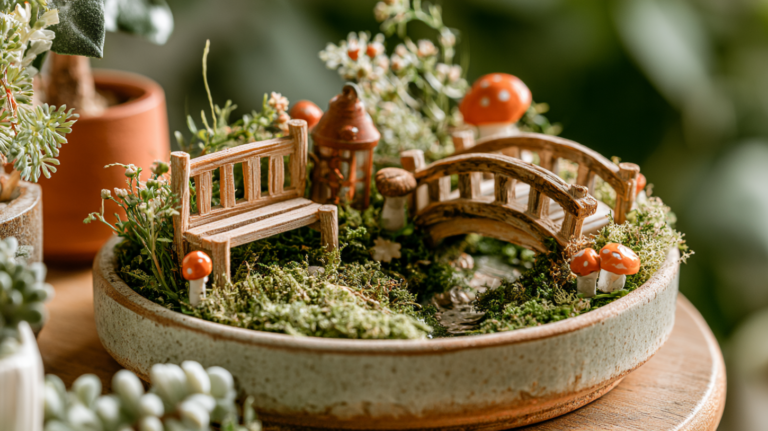
Arranging a few smooth pebbles or a small piece of driftwood at the edge softens the look and gives visiting insects a place to land, in much the same spirit as adding pathways and bridges to a miniature fairy garden.
Keeping the Water Healthy
A small water garden looks after itself surprisingly well once it is balanced. Top it up as water evaporates in warm weather, ideally with collected rainwater, which suits aquatic plants better than treated tap water. A rain barrel in a small garden is the perfect partner for keeping your pot topped up.
If algae appears, resist the urge to empty and scrub everything. Usually it means the water needs more shade from floating plants or more oxygenating plants to compete with the algae. Remove any decaying leaves promptly, and thin plants when they start to crowd the surface.
A Note on Wildlife
Even a tiny pot of water is a gift to wildlife. Birds will come to drink and bathe, bees and hoverflies will visit, and in a quiet garden you may find that dragonflies and other creatures discover your miniature pond within weeks. If you want to encourage this, keep at least one gently sloping edge or a stone stepping-stone so small visitors can climb out safely.
Winter Care
In cold climates, most tender floating plants will not survive a hard freeze, so treat them as seasonal or move the container somewhere sheltered. Hardy marginals and oxygenators generally cope, but a small pot can freeze solid, so shift it to a protected corner or insulate the sides if very hard frost is forecast.
A Little Pond, A Lot of Peace
A miniature container water garden proves that you do not need a big plot to enjoy the serenity of water. With one watertight pot, a handful of plants, and a sunny corner, you can create a tiny, living pond that changes with the light and draws life to the smallest of spaces. It may be the most peaceful thing you ever add to your garden.