Best Fairy Garden Kits for Beginners: A Buyer’s Guide
This post contains affiliate links. As an Amazon Associate we earn from qualifying purchases, at no extra cost to you.
Fairy gardens are one of the most delightful creative hobbies you can start — a tiny living world built in a container, combining real plants with miniature accessories to create something genuinely magical. For beginners, a ready-made kit is the easiest possible way to get started. Instead of hunting down individual pieces and hoping they match, a kit gives you a coordinated collection designed to work together. Here’s what to look for, and how to make your first build a success.
Why Start with a Kit?
Building a fairy garden from scratch means sourcing a fairy house, furniture, figurines, natural details, and accessories separately — and hoping they’re all at the same scale. That’s fine once you know what you’re doing, but for a first build it can be overwhelming and expensive. A kit solves this by bundling everything into one box at a consistent scale and price, so you can focus on the fun part: planting and arranging. Kits are also excellent for crafting with children — everything they need is in the box, and the contained scope makes it easy to complete in one sitting.
What a Good Fairy Garden Kit Includes
The best beginner kits typically include:
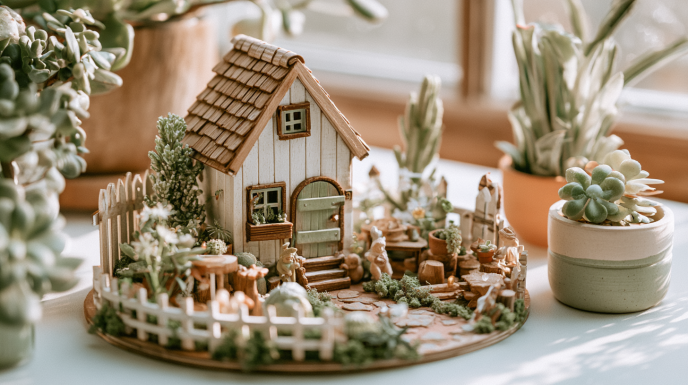
- A focal structure: Usually a fairy house, cottage, mushroom home, or miniature door. This anchors the entire scene and sets the theme.
- Miniature furniture: A bench, chair, table, or swing — pieces that suggest someone lives there and goes about their day.
- Path and border elements: Tiny stepping stones, a miniature fence, or a small bridge to create depth and a sense of a real garden layout.
- Figurines: Fairies, gnomes, woodland animals, or birds that inhabit the scene and give it life.
- Decorative details: Mushrooms, lanterns, signs, pebbles, or shells — the finishing touches that make the scene feel complete.
Some kits also include a container and soil, though most provide accessories only — you’ll supply the planting container and plants yourself.
What to Look for Before You Buy
Scale Consistency
This is the most important factor and the one most often overlooked. Fairy garden accessories typically come in 1:12 scale (where one inch equals one foot in “real” scale). If you mix pieces from different scales — a large fairy house with tiny furniture, for instance — the scene looks wrong in a way that’s hard to articulate but immediately noticeable. Check product descriptions for scale information, and if you’re adding to a kit later, match the scale of what you already have.
Material Quality
Fairy garden accessories are made from resin, ceramic, metal, or plastic. For outdoor use, resin and metal are the best choices — they handle UV exposure, rain, and frost far better than painted plaster or thin plastic, which crack, fade, and crumble within a season outdoors. For indoor fairy gardens, a wider range of materials works fine. Look for hand-painted pieces with sealed finishes for the most realistic, polished look.
Theme and Style
Kits come in a wide range of themes. Choose one that genuinely appeals to you, because you’ll be looking at it every day:
- Woodland / forest cottage: Toadstool houses, gnomes, animals, natural wood finishes. The most classic fairy garden style.
- Whimsical storybook: Bright colours, fanciful shapes, fairy figurines with wings and wands. Wonderful for children’s gardens.
- Rustic farmhouse: Wheelbarrows, watering cans, vegetable patches, and stone finishes. Suits herb and kitchen gardens.
- Beach or coastal: Driftwood, shells, lighthouses, and sand. Beautiful in a wide shallow bowl.
- Enchanted forest: Dark, mossy, dramatic. Twisted trees, mushrooms, hidden doors. More grown-up in feel.
Number of Pieces
More pieces isn’t always better. A beginner kit with 8–12 well-designed pieces that work together creates a more cohesive scene than a 30-piece kit of mismatched accessories. Look for kits where the pieces feel like they belong in the same world rather than a random collection of items.
Container Included or Not
Some kits include a pot or base; most don’t. If you’re buying accessories only, plan your container before you buy — the scale of the kit should relate to the size of your container. A small kit in a large pot will look lost; a large kit in a small pot will look cramped.
What You’ll Add Yourself
Most kits supply the accessories but not the living elements. To complete your fairy garden you’ll also need:
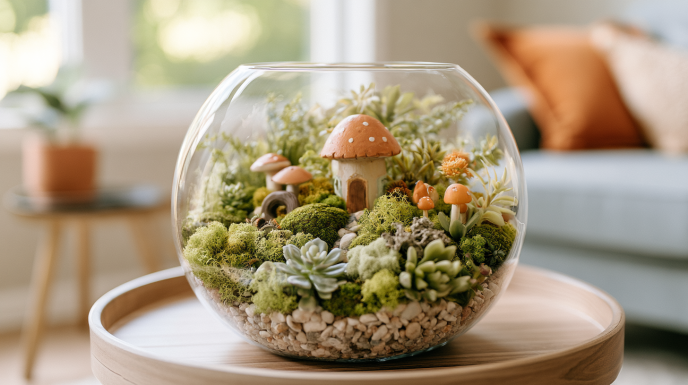
- A container with drainage (a wide, shallow bowl works beautifully)
- A pebble drainage layer and potting mix
- Two to four small plants — succulents for bright spots, baby tears or miniature ferns for indirect light
- Some moss (fresh, dried, or preserved) for ground cover
The combination of kit accessories and living plants is what makes a fairy garden come alive. The plants give it depth, texture, and growth — the accessories give it story and personality.
Tips for Your First Build
Plan before you plant. Lay all your accessories out and arrange them on the soil surface before doing any planting. This lets you visualise the scene and move things around easily. Once you’re happy with the layout, plant your greenery around the arrangement.
Start with the focal piece. Place your fairy house or main structure first, slightly off-centre. Everything else — the path, the furniture, the figurines — should relate to it spatially, as if they exist in the same world.
Create a path. A small winding path made of pebbles or stepping stones leading to your fairy house makes the scene feel real and draws the eye naturally through the composition.
Use moss generously. Moss tucked around the base of plants and accessories ties the whole scene together and makes it look established and lush, even on day one.
Leave open space. Resist the urge to fill every inch. Open areas of moss or ground cover give the scene room to breathe and make it feel like a real garden rather than a cluttered shelf.
Expand and Personalise Over Time
One of the great pleasures of fairy gardening is that it evolves. Your starter kit gives you a foundation, and over time you’ll find individual pieces — a perfect little bench at a market, a tiny lantern at a craft fair, a beautiful stone on a walk — that make your garden uniquely yours. Seasonal swaps keep it fresh: a pumpkin in autumn, a tiny wreath in winter, spring flowers when the season turns.
Start Your Tiny World Today
A fairy garden kit is the most accessible entry point into one of the most rewarding creative hobbies there is. Choose one with a theme you love, quality materials, and consistent scale — pair it with a simple container and a handful of small plants — and you’ll have a magical miniature world ready in an afternoon. It’s a wonderful thing to make, and an even better thing to keep.