Low-Maintenance Perennials That Come Back Every Year
This post contains affiliate links. As an Amazon Associate we earn from qualifying purchases, at no extra cost to you.
If you love a colorful, lush garden but not the effort of replanting every spring, perennials are the answer. Plant them once, and they return season after season — often getting fuller, more vigorous, and more beautiful with each passing year. In a small garden or courtyard, a well-chosen mix of perennials gives you structure, color, and life without the annual replanting work. Here are the toughest, most rewarding low-maintenance perennials to know about.
What Makes Perennials Different
Unlike annuals — which complete their entire life cycle in one growing season and die — perennials go dormant in winter and regrow from the same root system the following spring. Over time, many perennials spread and form larger clumps, so what starts as a single small plant can eventually fill a whole border. This means your initial investment in a perennial keeps paying off for years, which makes them especially cost-effective for small gardens where every plant needs to earn its place.
Most perennials also become more drought-tolerant as their root systems establish, reducing the watering burden significantly after the first season. And many are genuinely low on pest and disease problems once settled — they’re plants that have evolved to come back year after year, which makes them tough by nature.
The Best Low-Maintenance Perennials
Lavender (Lavandula)
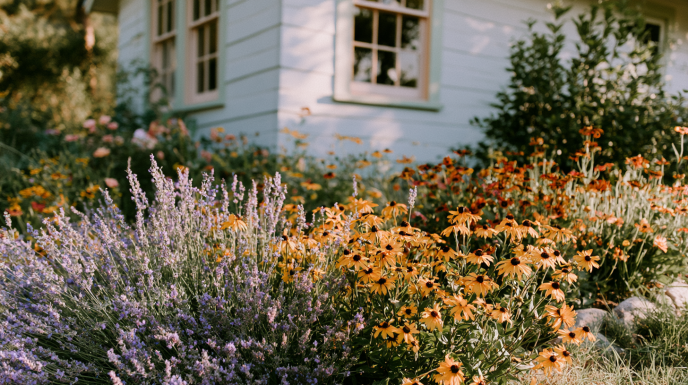
One of the most beloved garden plants in the world, and for good reason. Lavender is drought-tolerant, fragrant, loved by bees and butterflies, and produces gorgeous purple spikes from late spring through summer. It thrives in full sun and poor, well-drained soil — in fact, too much water or rich soil makes it leggy and short-lived. Give it a hard trim after flowering to keep it compact and bushy, and it will reliably return for many years. Also works well in containers.
Coneflower (Echinacea)
A North American prairie plant that is almost indestructible in a garden setting. Echinacea produces large daisy-like flowers — typically purple-pink, though modern varieties come in orange, yellow, white, and red — from midsummer through autumn. It handles heat, drought, and poor soil without complaint, and the seedheads left on the plant over winter feed birds and look beautiful frosted. Divides easily every few years to make more plants.
Black-Eyed Susan (Rudbeckia)
Cheerful, golden-yellow flowers with dark brown centres from midsummer through autumn. Black-eyed Susans are among the easiest perennials to grow — they spread happily, tolerate clay soil and drought, and attract a wide range of pollinators. They naturalise freely, so in a few years a single plant becomes a generous colony. Deadhead spent flowers to extend the blooming period, or leave them for seed-eating birds.
Sedum (Stonecrop)
A group of succulent-leaved perennials that thrive in dry, sunny spots where other plants struggle. Tall sedums like ‘Autumn Joy’ produce flat-topped flower clusters in late summer and autumn — starting pink, deepening to copper as the season progresses — and the dried seedheads provide structure through winter. Ground-hugging sedums work beautifully as edging or between paving stones. All sedums are exceptionally drought-tolerant once established.
Daylily (Hemerocallis)
Virtually indestructible, daylilies produce an abundance of trumpet-shaped blooms in an enormous range of colours — yellow, orange, red, pink, purple — from early summer onwards. Each individual flower lasts only a day, but each stem carries multiple buds, so the display continues for weeks. They’re extremely tolerant of poor soil, drought, and neglect, and clumps expand reliably each year. Divide every three to four years to keep them flowering freely.
Hosta
The perennial of choice for shady spots. Hostas are grown primarily for their bold, architectural foliage — available in every shade from deep blue-green to bright chartreuse, often with beautiful variegation. They’re essentially maintenance-free: plant them in shade or dappled light, water until established, and they’ll come back larger each year for decades. Slugs can be a problem — look for slug-resistant varieties like ‘Halcyon’ or ‘Sum and Substance’.
Ornamental Grasses
Not technically flowering perennials, but an invaluable category for low-maintenance gardens. Grasses like Miscanthus, Pennisetum, and Calamagrostis provide structure, movement in the breeze, and year-round interest with virtually no care required beyond an annual cut-back in late winter. They’re drought-tolerant, pest-free, and look spectacular with morning dew or frost.
Perennials for Containers
Short on ground space? Many perennials adapt surprisingly well to container life. Lavender, sedum, compact daylilies, agapanthus, and ornamental grasses all work well in larger pots on a patio or balcony. The key difference with potted perennials is winter protection: since the roots are above ground level, they’re more exposed to frost. In cold climates, move pots to a sheltered spot or wrap them with fleece over winter. Refresh the top few inches of compost each spring and feed regularly, since container perennials can’t forage for nutrients the way ground-planted ones can.
Simple Seasonal Care
Low-maintenance doesn’t mean zero maintenance. Here’s the minimal care routine that keeps perennials thriving:
- Spring: Clear away any dead growth left over winter. Apply a layer of compost or mulch around the base of plants to feed the soil and suppress weeds. Divide any overcrowded clumps.
- Summer: Water during prolonged dry spells, especially in the first season before roots are established. Deadhead flowers if you want to extend the blooming season.
- Autumn: Cut back herbaceous perennials to the ground after the first frosts, or leave seedheads standing for winter wildlife interest — both approaches are valid.
- Winter: Most perennials need nothing. The dormant roots are perfectly hardy underground. Enjoy the structure of any seedheads or grasses left standing.
Plan for Year-Round Color
The secret to a perennial garden that’s interesting all year is layering plants with different bloom times. Combine early-season bloomers (hellebores, pulmonaria), summer stars (echinacea, daylilies, lavender), and late-season performers (sedum, rudbeckia, asters), and underpin them with structural plants like grasses and hostas that look good even when they’re not in flower. A thoughtful mix means something is always worth looking at, from the first warm days of spring through to the first frosts of winter.
Plant Once, Enjoy for Years
Perennials are one of the wisest investments you can make in a garden. They reward patience — getting better each year — and dramatically reduce the time and cost of maintaining a beautiful outdoor space. Start with two or three reliable choices from this list that suit your conditions, let them establish over a couple of seasons, and then build your collection from there. A well-planted perennial border almost runs itself.