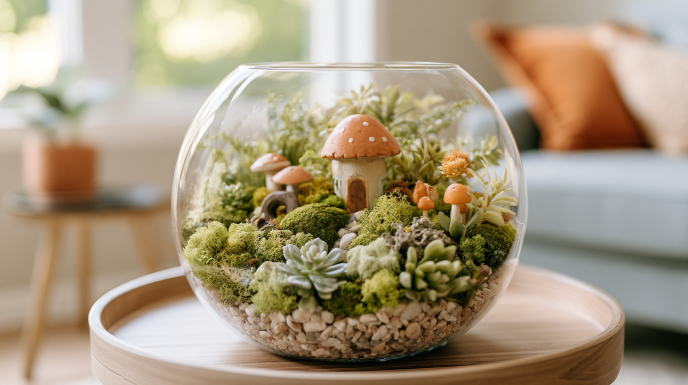
How to Make a Fairy Garden in a Drawer: Upcycled Vintage Magic for Small Spaces
There’s something irresistible about giving a forgotten object a second life — and an old wooden drawer makes one of the most charming fairy garden containers you’ll ever find. Rescued from a battered chest, a junk-shop desk or a dressing table nobody wanted, a drawer offers a ready-made rectangular frame with low sides, a flat base and bags of vintage character. It’s shallow enough to sit happily on a balcony table, a shelf or a windowsill, which makes it perfect for small-space gardeners who want a slice of miniature magic without giving up precious floor room.
Here’s how to turn a tired drawer into an enchanting little landscape, step by step.
Why a drawer makes such a good fairy garden
The appeal of a drawer is all in its shape. The long, low rectangle gives you a natural stage to lay out a scene from front to back, so you can build a little path that wanders from a cottage at one end to a tiny pond at the other. The shallow depth keeps the whole thing light and portable, and the wooden sides add instant rustic warmth that plastic pots simply can’t match. Handles, keyholes and worn paint only add to the storybook feel.
Because it’s so compact, a drawer garden is also wonderfully low-commitment. You can plant it up in an afternoon, move it indoors when the weather turns, and rework the scene whenever the mood takes you. If you enjoy the upcycled approach, you’ll find the same magpie spirit in our guide to making a fairy garden in a basket.
Preparing the drawer
A drawer was built for a chest, not the outdoors, so a little prep keeps it going for seasons rather than weeks. Start by lining the inside with a sheet of plastic — an old compost bag cut to fit works perfectly — to stop damp soil rotting the wood from within. If the garden will live outside and you want living plants, pierce a few small drainage holes through the base and the liner so water can escape; stand the drawer on little feet or bottle caps to lift it off the surface.
If you’d rather preserve a beautiful antique drawer, keep it indoors, skip the drainage holes, and use faux plants or hardy succulents in their own small nursery pots tucked into the display. A coat of exterior wood oil or a water-based sealant on the outside protects the finish while letting that gorgeous aged grain show through.
Building the landscape
Now for the fun part. Half-fill the lined drawer with a light peat-free compost, or a free-draining succulent mix if you’re using them, and start shaping the terrain. Mound the soil a little higher at the back to create depth and a sense of rolling hills, and press in a few stones to suggest a rocky outcrop.
Lay a winding path of fine gravel, crushed shell or tiny pebbles curving from one side to the other — a meandering route always looks more magical than a straight line. Sink a shallow lid or a small dish flush with the soil and fill it with blue glass pebbles for an instant pond. Use scraps of bark, moss and twigs to edge the path and soften the corners. The secret to a convincing miniature scene is varying the height: a hill here, a hollow there, so the eye travels through the landscape.
Choosing tiny plants
Scale is everything in a fairy garden, so reach for the smallest, slowest plants you can find. Mind-your-own-business (Soleirolia) forms a lush mossy carpet, baby’s tears spills softly over edges, and dwarf ferns or tiny-leaved sedums read beautifully as miniature trees and shrubs. A cushion of real moss pressed onto the soil instantly conjures a woodland floor.
Keep the planting restrained — a drawer is small, and a few well-chosen specimens look far more enchanting than a crowd. For a fuller rundown of the best miniature greenery and how to keep it thriving, see our guide to the best plants for a fairy garden.
Adding the magic
This is where your drawer becomes a world. Nestle in a little cottage or toadstool house, prop a miniature bench beside the pond, and arrange a few pebble stepping stones along the path. A tiny arched door fixed to the inside of the drawer’s back panel — as if leading into the chest itself — is a gorgeous touch; our tutorial on making fairy garden doors shows how. Finish with fairy lights threaded along the back edge, a wisp of lichen on a twiggy tree, or a scattering of tumbled crystals to catch the light.
Resist the urge to add everything at once. A single well-placed figure and one or two props tell a story; a cluttered scene just looks busy. Leave a little open ground so the imagination has room to wander.
Caring for your drawer garden
Mist living plants regularly rather than soaking them — the shallow soil dries and waterlogs quickly, so a gentle spray keeps the moss green without drowning the roots. Set the drawer somewhere bright but out of harsh midday sun, which can scorch tender foliage and fade delicate ornaments. If frost threatens, bring the whole thing indoors; being so light and portable is one of the drawer garden’s best tricks.
Best of all, a drawer fairy garden is never truly finished. Swap in seasonal touches — a dusting of fake snow in winter, a tiny bunting for spring — and your rescued drawer becomes a living, changing little world that proves you need almost no space at all to grow a bit of everyday enchantment.