How to Grow Onions in Containers: A Small-Space Guide
Onions are one of those kitchen staples we buy on autopilot, which makes growing your own feel surprisingly satisfying. And while they’re often pictured in long rows in a traditional allotment, onions grow perfectly well in containers, making them an easy win for anyone with just a patio, balcony or sunny doorstep. They’re undemanding, they store for months, and a single well-filled pot can keep your kitchen supplied. Here’s how to grow them in a small space.
Why onions suit container growing
Onions have shallow roots and don’t need deep soil, which makes them a natural fit for pots and troughs. In a container you also get to give them exactly what they love — loose, free-draining soil and full sun — without fighting heavy ground or competing weeds. Because they grow upright and fairly close together, you can fit a worthwhile number into a modest pot, and raising them off the ground helps keep them away from some soil-dwelling pests. For a small-space grower, onions are a low-effort, high-reward crop.
Sets or seed?
You can grow onions from seed or from sets, which are tiny part-grown bulbs. For container growing, sets are far and away the easier choice. They establish quickly, are more forgiving of imperfect conditions, mature faster than seed, and are much less fiddly to handle. Seed gives you a wider choice of varieties and works out cheaper for large quantities, but for a few pots on a patio, a bag of sets is the simplest, most reliable route to a crop.
Choosing the right container
Because onions are shallow-rooted, you don’t need a deep pot — around 8 inches deep is plenty — but width is where the yield comes from, so go as wide as you can. A broad trough or a large tub lets you grow many bulbs in one place. As with any container crop, drainage is essential, so make sure there are plenty of holes in the base; onions sitting in wet soil will rot rather than swell. A wide window box or a half-barrel both make excellent onion planters.
Soil and planting
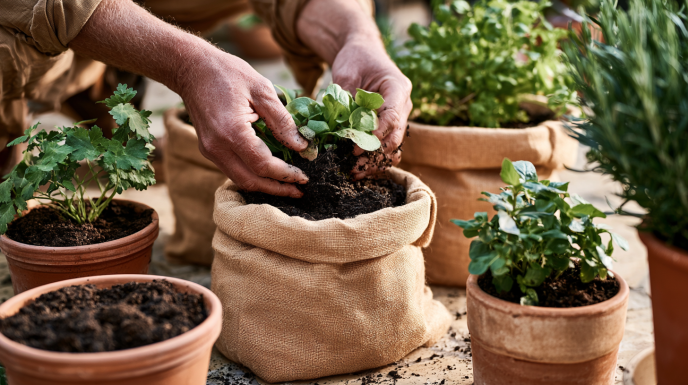
Fill your container with a good-quality multipurpose compost, ideally with a little added grit or sand to sharpen the drainage. Push each set into the soil so just the pointed tip peeps above the surface, spacing them around 4 inches apart in every direction to give each bulb room to swell. Firm them in gently and water lightly. Planting is genuinely that simple, and it’s a lovely job to do with children because the results are so easy to see.
When to plant
Timing depends on the type. Spring-planted sets go in from early spring for a late-summer harvest, while autumn-planting, or overwintering, varieties go in during autumn to stand through winter and crop earlier the following summer. Autumn planting is a brilliant way to make use of containers over the colder months when they’d otherwise sit empty, giving you a head start on next year. Check the variety on the packet so you plant at the right moment for your crop.
Caring for your onions
Onions are refreshingly undemanding, but a little care gives much bigger bulbs. Keep them in the sunniest spot you have, because sunshine is what drives the bulbs to size up. Water steadily so the soil stays lightly moist but never waterlogged, easing back as the bulbs mature later in the season. Keep the surface free of weeds that would compete for food and water — easy in a container — and an occasional feed with a balanced liquid fertiliser through the growing season encourages strong growth. The same feeding principles covered in our guide to feeding container vegetables apply here too.
Knowing when to harvest
Your onions will tell you when they’re ready. As the bulbs finish swelling, the green tops naturally yellow, flop over and begin to dry. That’s your signal. Stop watering, and on a dry day gently lift the bulbs from the soil. It’s worth the small wait, because properly ripened onions store far better than ones pulled early. Resist the temptation to bend the tops over by hand, which was once common advice but can actually invite rot.
Drying and storing
To keep onions for months rather than weeks, they need curing. Spread the lifted bulbs somewhere warm, dry and airy — a greenhouse bench, a sunny windowsill or a sheltered table outdoors — for a couple of weeks until the skins are papery and the necks are fully dry. Once cured, store them somewhere cool, dark and well-ventilated, in nets or loosely in a basket rather than a sealed bag. Well-cured onions from a single summer’s pots can last you well into winter.
A staple crop anyone can grow
Onions prove that growing your own food doesn’t require a plot or much skill — just a wide pot, some sets, a sunny spot and a little patience. They’re forgiving of beginners, generous with their yield, and endlessly useful in the kitchen, with the autumn-planting varieties even earning their keep over winter. Plant a container or two this season and you’ll be pulling your own homegrown onions before you know it. For more easy edible ideas, visit our Grow Your Own section.