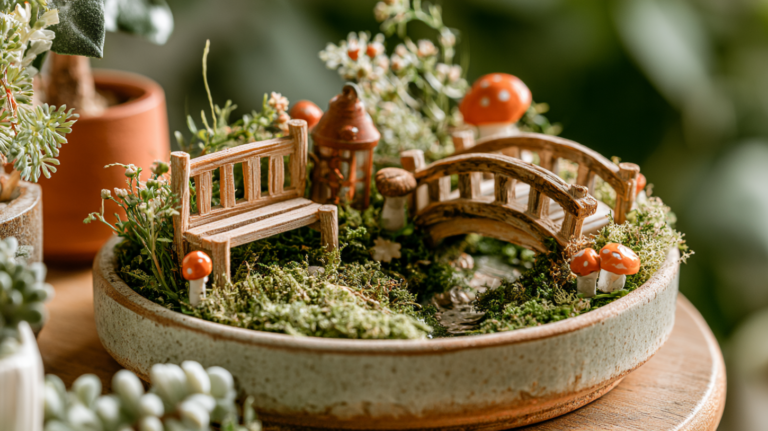
Fairy Garden Houses: How to Choose and Style the Perfect Miniature Home
Every fairy garden has a heart, and that heart is almost always a tiny house. It is the first thing the eye lands on, the anchor the whole miniature scene arranges itself around. Get the little house right and everything else — the winding path, the moss lawn, the tiny bench — falls into place around it. Get it wrong and even the prettiest planting can feel like it is missing its centre.
Whether you are building your very first miniature world or adding to a collection, choosing and styling a fairy garden house is the most enjoyable decision you will make. It is also the one that gives your garden its personality. Here is how to pick the perfect one and make it feel truly lived-in.
What Makes a Good Fairy Garden House
The best fairy houses share a few qualities. They are the right scale for their setting — a house that towers over its pot breaks the illusion, while one lost in a large container disappears. As a rough guide, the house should take up no more than about a third of the display, leaving room for a garden around it.
They are made of the right material for where they will live. Resin and polyresin houses are the most popular because they are detailed, affordable, and reasonably weatherproof. Ceramic and terracotta houses look beautiful but can crack in frost. Wood and bark houses have wonderful natural charm but need shelter to last. And for the truly hands-on, a handmade house from stones, twigs, or clay carries a character no shop-bought piece can match.
Match the House to a Theme
A fairy garden feels most magical when everything tells one story, and the house sets that story going. A round-doored cottage with a mossy roof suggests a classic woodland tale. A weathered, whitewashed cabin with a little anchor nearby hints at the seaside — the same feeling behind a coastal beach fairy garden. A toadstool house with a bright spotted roof leans playful and whimsical, perfect for a child’s garden.
Once you have chosen the house, let it guide the rest. Woodland cottage? Add ferns, pebble paths, and acorn-cap details. Seaside cabin? Reach for shells, sand, and driftwood. The house is the keynote; every other piece should harmonise with it.
Placing the House Within the Scene
Resist the urge to plonk the house dead centre. Miniature gardens, like real ones, look more natural when the focal point sits slightly off to one side, with a path leading the eye toward it. Tuck the house toward the back or a corner and let a winding path of pebbles or gravel wander up to the door.
Give it a believable setting. Nestle the base into the soil or moss so it looks rooted rather than dropped on top. Raise it slightly on a small mound if you want it to feel like a hillside home. The same trick works whether your fairy garden lives in a shallow bowl, a raised birdbath, or a repurposed tree stump — settle the house into its surroundings and it instantly belongs.
Weatherproofing an Outdoor Fairy House
If your miniature garden lives outdoors, the little house needs a little protection to survive the seasons. Sun fades paint, rain seeps into porous materials, and frost can crack ceramics. A few simple steps keep a house looking good for years.
Seal it. A coat of clear outdoor varnish or acrylic sealer over a resin or wood house guards against fading and moisture. Reapply once a year. Lift it off wet ground by setting it on a flat stone or a bed of gravel, so it is not sitting in a puddle after every downpour. And in hard-freezing climates, bring delicate ceramic or terracotta houses indoors for winter, or move the whole display to a sheltered porch.
Styling the Details Around the Door
The magic of a fairy house lives in its details, and the area right around the door is where those details matter most. A tiny doormat cut from a scrap of coir, a miniature lantern by the entrance, a pair of little boots on the step — these small touches invite the imagination in and make the house feel occupied.
Add a sense of life with planting. Low, slow-growing plants like baby’s tears, moss, and miniature ferns look like a real fairy lawn and keep the scale believable. A creeping thyme spilling over a wall or a tiny succulent by the doorstep softens the edges. Keep the planting small and tidy; overgrown foliage quickly swallows a little house.
Let It Evolve
The loveliest fairy gardens are never quite finished. Once your house is in place and styled, add to the scene slowly — a new figurine here, a tiny wheelbarrow there, a fresh path after a season. Move things around, try a different plant, swap the doormat with the seasons. A fairy garden house is not a decoration you set and forget; it is the beginning of a little world that grows and changes right alongside you.