Best Self-Watering Planters for Busy People
This post contains affiliate links. As an Amazon Associate we earn from qualifying purchases, at no extra cost to you.
If your plants have a habit of wilting the moment you get busy — or you’ve returned from a trip to find a casualty on your windowsill — a self-watering planter could change everything. These cleverly designed pots take the guesswork out of watering by feeding plants from a reservoir at their own pace. Here’s how they work, what makes a good one, and which plants benefit most.
How Self-Watering Planters Work
A self-watering planter has two sections: a growing area where the plant and soil sit, and a reservoir of water below or around it. A wicking mechanism — usually soil wicking, a rope, or a perforated inner pot — draws water upward from the reservoir into the root zone as the soil dries out. The plant essentially waters itself on demand, taking only what it needs when it needs it.
You fill the reservoir (usually through a side tube or fill hole) every one to two weeks rather than watering the soil surface daily. Most planters include a water-level indicator so you can see at a glance whether the reservoir needs topping up. When the water runs out, the indicator drops — a clear, simple signal that requires no guessing or soil poking.
Why Self-Watering Planters Produce Better Results
Beyond convenience, self-watering planters often produce noticeably healthier plants than hand-watered ones. Here’s why:
- Consistent moisture: Plants get water continuously at a steady rate. The devastating cycles of too dry, then overwatered, then too dry again — which stress plant roots and cause problems like leaf drop, wilting, and cracked tomatoes — are eliminated.
- Roots grow deeper: Because water is available from below, roots naturally grow downward toward the reservoir rather than staying shallow near the surface. Deeper root systems mean more stable, resilient plants.
- Less overwatering: The plant takes water at its own pace, so even if you fill the reservoir to the top, you can’t accidentally drown it the way you can with overhead watering.
- Less waste: Closed reservoir systems lose almost no water to evaporation or runoff, making them significantly more efficient than surface watering — particularly valuable in hot weather.
- Reduced fungal problems: Watering from below keeps leaves and stems dry, which reduces the conditions that encourage fungal diseases like mildew and leaf spot.
What to Look for When Buying
Not all self-watering planters are equally well made. These are the features that matter:
- Water-level indicator: Essential. A clear, easy-to-read gauge saves the guesswork entirely. Look for one with a marked minimum and maximum fill level.
- Reservoir size: Larger reservoirs mean fewer refills. For a hot balcony in summer, a bigger reservoir is worth the extra size. For an indoor plant in a cool room, a smaller one is sufficient.
- Overflow hole: If the planter will live outdoors, an overflow hole prevents the reservoir from filling up in heavy rain and drowning the plant from below. Crucial for outdoor use.
- Durable material: Look for UV-stable, BPA-free plastic for outdoor use (it won’t fade or crack in the sun), or glazed ceramic for indoor planters. Cheap thin plastic warps and cracks within a season.
- Wicking mechanism: Some planters use a separate wick; others rely on soil contact with the reservoir. Both work, but soil-contact systems with a perforated inner pot tend to be more reliable and easier to maintain.
- Drainage system: Even a self-watering planter should allow excess water to escape during very wet conditions. Check that the design allows for this in outdoor settings.
Best Plants for Self-Watering Planters
Most plants that prefer consistent, even moisture thrive in self-watering systems. The best candidates include:
- Herbs: Basil, parsley, mint, and chives all appreciate consistent moisture and produce prolifically in self-watering pots.
- Tomatoes and peppers: These are among the biggest beneficiaries. Consistent moisture prevents blossom end rot in tomatoes and encourages steady fruit development in both.
- Lettuce and salad greens: Leafy greens bolt (run to seed) quickly when they dry out. Self-watering pots keep them productive for much longer.
- Strawberries: Love consistent moisture and do beautifully in self-watering planters.
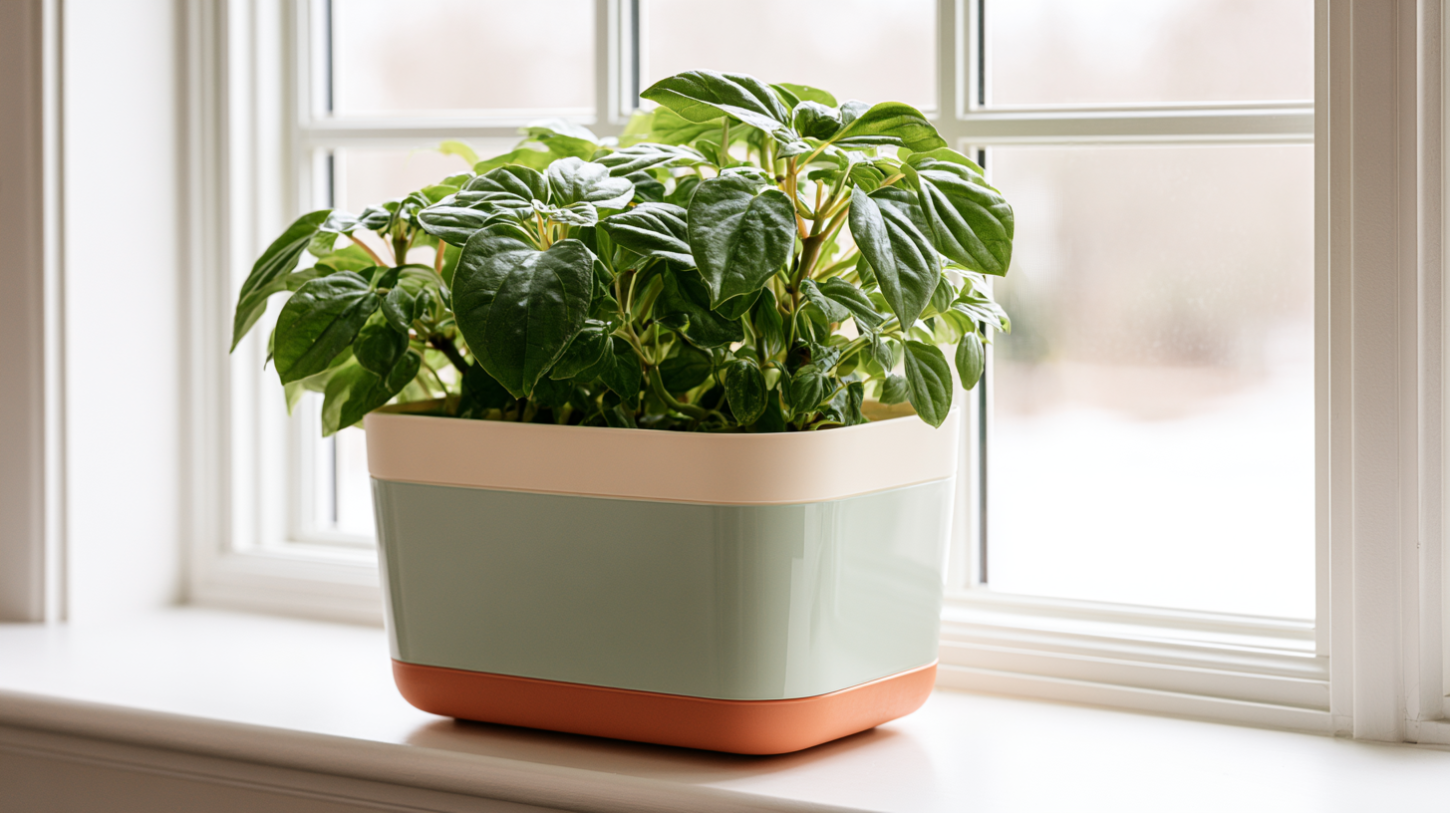
- Peace lilies, ferns, and pothos: Moisture-loving houseplants that often suffer from inconsistent hand-watering.
The exception is plants that prefer to dry out between waterings — succulents, cacti, lavender, and rosemary. These do better in standard pots where you control the dry periods intentionally.
Using Your Self-Watering Planter Correctly
A few simple habits make a big difference to how well these planters work:
For the first 1–2 weeks after planting, water from the top as you normally would until the roots have had time to grow downward and make contact with the reservoir. If you fill the reservoir immediately on planting, seedlings with short roots can’t reach the water and may dry out at the surface.
Fill from the reservoir inlet, not by watering the soil surface. Once established, the plant should get all its water from the reservoir. Topping up from above can lead to overwatered soil at the surface while the roots are happily drinking from below.
At the end of the growing season, empty the reservoir completely before winter if the planter will be exposed to frost. Water expands when it freezes and can crack the reservoir.
Clean the reservoir periodically — about once per season — to prevent algae buildup and mineral deposits from tap water.
A Simple Upgrade with a Big Impact
A self-watering planter won’t replace good gardening judgment, but it will dramatically reduce the consequences of forgetting to water, going away for the weekend, or simply having a busy week. For anyone who grows herbs, vegetables, or moisture-loving plants in pots — indoors or on a balcony — it’s one of the most practical and worthwhile upgrades you can make. Start with one for your most water-hungry plant and see how much easier life gets.