How to Grow Spinach in Containers: Fresh Leaves From a Small Space
Spinach is one of the most satisfying crops you can grow in a small space. It is fast, it is forgiving, and it gives you handful after handful of tender, homegrown leaves for salads, smoothies, and cooking. Best of all, it does not need a vegetable plot. A single pot on a balcony, doorstep, or windowsill can keep you in fresh spinach for weeks, and early autumn is a perfect time to sow it.
If you have been meaning to try growing something you can actually eat, this is a brilliant beginner crop. Here is how to get a healthy, leafy harvest from a container.
Why spinach loves growing in pots
Spinach has shallow roots and grows quickly, which makes it ideally suited to container life. You do not need deep soil or a large space, and because it matures fast you can be picking leaves just a few weeks after sowing. It also prefers cooler weather, so a sowing now, as the fierce summer heat fades, tends to do far better than one made in high summer, when spinach is prone to bolting and turning bitter.
Growing it in a pot gives you control, too. You can position it in the best light, move it out of harsh weather, and keep slugs at bay far more easily than in open ground.
Choosing a container and compost
Spinach is not fussy about its pot, but a wider container beats a deep, narrow one because the roots spread sideways rather than down. Aim for something at least 15 to 20 centimetres deep and as wide as you can manage, since more surface area means more leaves. A window box, a trough, or even a large salad bowl with drainage holes all work well.
Fill it with good multipurpose compost. Spinach is a leafy crop, so it appreciates a rich, moisture-retentive mix. Make sure the container has drainage holes, because although spinach likes steady moisture, it will rot in waterlogged soil.
Sowing your seeds
Sowing spinach could not be simpler. Scatter the seeds thinly across the surface of the compost and cover them with about a centimetre of soil, then water gently. Within a week or two you should see the first seedlings appear.
Once they are big enough to handle, thin them out so the remaining plants sit around 10 to 15 centimetres apart. Crowded spinach competes for light and stays weak, so do not skip this step. Do not waste the thinnings, either; the tiny leaves you pull out are delicious tossed straight into a salad.
For a steady supply rather than a single glut, sow a small pinch of seed every couple of weeks. This “little and often” approach keeps young leaves coming for months.
Watering and feeding for tender leaves
The secret to sweet, tender spinach is consistent moisture. If the compost dries out, the plant panics, thinks its life is nearly over, and rushes to flower, which turns the leaves tough and bitter. Check the pot daily in warm spells and water whenever the surface starts to feel dry.
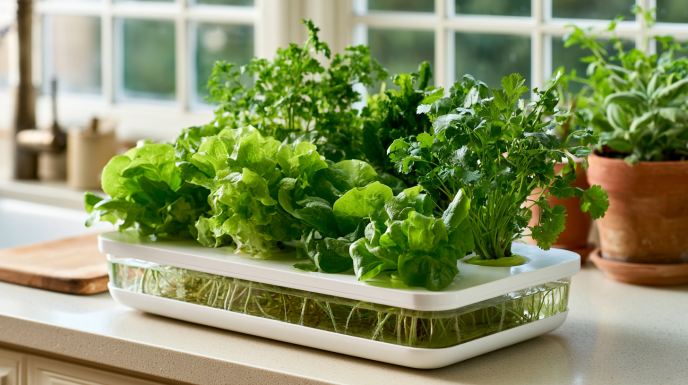
Because you are harvesting leaves, spinach responds well to a nitrogen-rich feed. A weekly dose of a balanced liquid fertiliser keeps the plants lush and productive. If watering is a struggle during the working week, a pot fitted into a self-watering planter takes a lot of the worry out of keeping the compost evenly moist.
Harvesting little and often
You can begin picking as soon as the leaves are big enough to bother with, usually around four to six weeks after sowing. The best approach is “cut and come again”: take a few of the outer, larger leaves from each plant and leave the small central ones to keep growing. Picked this way, a single plant will supply you for weeks.
Harvest in the cool of the morning when the leaves are at their crispest, and use them quickly, as homegrown spinach is far more tender than the tough supermarket kind. Regular picking actually encourages more growth, so do not be shy.
Dealing with common problems
Spinach is largely trouble-free, but two things are worth watching. The first is bolting, when the plant sends up a flower stalk and stops making good leaves. Cool conditions, steady watering, and picking regularly all help delay it. Once a plant bolts, pull it up and sow a fresh batch.
The second is slugs and snails, which adore soft young seedlings. Raising your pot up on a stand or table, and clearing away hiding places nearby, keeps most of them away. If you have grown other leafy crops such as microgreens or salad leaves, you already know the drill; the same gentle vigilance keeps spinach in good shape.
A crop that keeps on giving
Few things are as rewarding as stepping outside and picking a handful of leaves for dinner. Spinach makes that possible even if all you have is a doorstep and a single pot. Sow a little now, keep the compost moist, and pick often, and you will have fresh, tender greens from the smallest of spaces well into the cooler months.