How to Grow Lettuce in Containers: Fresh Salad Leaves in Any Small Space
Few crops reward a small-space gardener as quickly as lettuce. It grows in shallow pots, tolerates a balcony or a doorstep, and can be ready to pick in as little as three to four weeks. If you have ever wished for fresh salad leaves without a vegetable patch, a couple of well-placed containers are all you really need.
Lettuce is also forgiving. It does not demand deep soil, blazing sun, or constant attention, and many varieties let you snip leaves again and again from the same plant. Here is everything you need to grow crisp, tender lettuce in pots, whatever the size of your outdoor space.
Why lettuce is perfect for containers
Lettuce has shallow roots, so it thrives in containers that would be far too small for tomatoes or potatoes. That makes it ideal for balconies, windowsills, steps, and narrow patios. Because you control the soil in a pot, you also avoid slugs and soil-borne problems that plague garden beds, and you can move the container to catch the best light or escape a heatwave.
Growing your own also means you pick only what you need, when you need it. There is no limp supermarket bag going to waste in the fridge, and cut-and-come-again types keep producing for weeks from a single sowing.
Choosing the right container
Almost anything that holds soil and drains well will grow lettuce. Aim for a container at least 6 to 8 inches deep, though shallower trays work for baby leaves. Width matters more than depth: a wide, shallow pot or window box gives you more plants and a bigger harvest.
Good options include:
- Window boxes and trough planters for a steady row of leaves
- Wide bowls or half-barrels for a mixed salad bowl
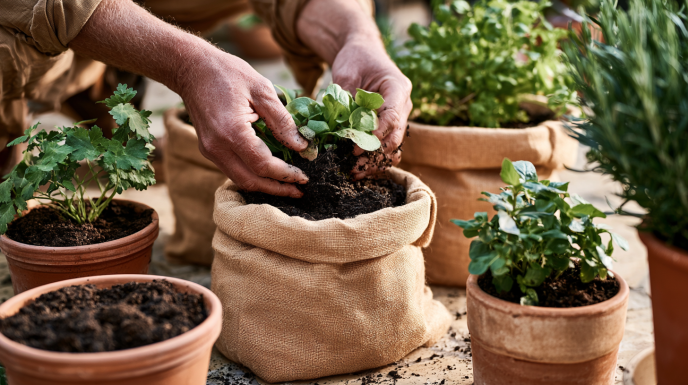
- Fabric grow bags, which drain freely and are easy to move
- Recycled tubs and buckets with drainage holes drilled in the base
Whatever you choose, drainage holes are non-negotiable. Lettuce likes consistent moisture but will rot in waterlogged soil.
The best soil for potted lettuce
Fill your container with a quality peat-free potting mix rather than garden soil, which compacts and drains poorly in pots. A general-purpose potting compost is fine, but you can improve it by mixing in a handful of compost or worm castings for a slow, gentle feed. Lettuce is a leafy crop, so it appreciates soil rich in nitrogen.
Leave an inch of space between the soil surface and the rim of the pot so water soaks in rather than running off the top.
Sowing and spacing
You can start lettuce from seed or buy young plug plants. Seed is cheap and gives you the widest choice of varieties. Scatter seed thinly over the surface, cover with a quarter-inch of compost, and keep it lightly moist. Seedlings usually appear within a week.
Once seedlings have a few true leaves, thin them out. For full heads, space plants about 8 inches apart. For loose-leaf and baby-leaf harvests, you can grow them much closer, roughly 4 inches apart, and simply pick young leaves as they grow. Sowing a fresh small batch every two to three weeks keeps salad coming all season, a trick known as succession sowing.
Light, temperature, and placement
Lettuce loves cool, bright conditions. It grows best in around 4 to 6 hours of sunlight, and in the heat of summer it actually prefers a spot with afternoon shade. High temperatures cause lettuce to bolt, which means it shoots up a flower stem and turns bitter.
Because it is a cool-season crop, lettuce is one of the best things to grow in spring and autumn. As the weather cools now, it is the perfect time to start a fresh container. If you garden on a hot balcony, tuck the pot behind taller plants or move it into dappled shade during heatwaves.
Watering and feeding
Consistent moisture is the single most important factor for tender, sweet lettuce. Containers dry out faster than the ground, so check daily in warm weather and water whenever the top inch of soil feels dry. Aim to keep the soil evenly moist but never sodden, and water at the base to keep the leaves dry and disease-free.
Because lettuce grows fast, a light liquid feed every couple of weeks keeps leaves lush. A balanced or nitrogen-rich organic fertilizer works well. If you want to dig deeper into feeding leafy crops, our guide to growing edibles in small spaces covers the essentials.
Harvesting for a continuous supply
The joy of container lettuce is the cut-and-come-again method. Instead of pulling the whole plant, snip the outer leaves about an inch above the base with scissors, leaving the center to keep growing. A single loose-leaf plant can be harvested this way many times over several weeks.
For full heads, wait until they feel firm and cut the whole plant at soil level. Harvest in the cool of the morning when leaves are crisp and full of water, and rinse them just before eating.
Best lettuce varieties for pots
Loose-leaf types are the easiest and most productive for containers. Look for cut-and-come-again mixes, oak-leaf types, and colorful blends that also look pretty on a patio. Butterhead varieties form soft, loose heads and cope well with cooler weather, while crisp romaine types do beautifully in a deeper pot. Salad-bowl mixes let you grow several leaf shapes and colors in one container.
Common problems and easy fixes
Lettuce is largely trouble-free, but a few issues crop up. Bolting is the most common: keep plants cool and well watered, and harvest promptly. Bitter leaves usually mean the plant is stressed by heat or is past its prime. Slugs and aphids can still find balcony pots, so check under leaves and remove pests by hand or with a gentle rinse.
If seedlings collapse at the base, you are likely overwatering. Ease off, improve airflow, and let the surface dry slightly between waterings.
A salad garden in a single pot
Lettuce proves that you do not need a big garden to eat homegrown food. With one wide container, a bag of potting mix, and a packet of seed, you can pick fresh leaves within weeks and keep the supply going with a little succession sowing. Pair it with a pot of herbs and a container of strawberries in a small space and you have a genuine kitchen garden on a balcony.
Start a container this week, keep it cool and evenly watered, and you will be tossing your own crisp salad long before the season turns. For more compact-growing ideas, browse the rest of our small-space gardening guides.