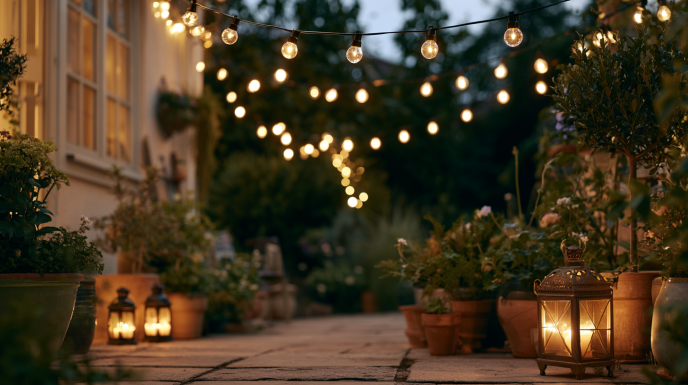
Best Solar Garden Lights for a Cozy Backyard
This post contains affiliate links. As an Amazon Associate we earn from qualifying purchases, at no extra cost to you.
Few things transform an outdoor space in the evening quite as quickly as good lighting. Solar garden lights are one of the easiest and most affordable ways to add that warm, glowing ambiance to a backyard, patio, or balcony — no electrician required, no trailing cables, and no electricity bill. They charge by day and glow by night, completely on their own. But not all solar lights are created equal, and choosing the wrong ones is a common and frustrating mistake. Here’s everything you need to know to buy the right ones for your space.
How Solar Garden Lights Work
Solar lights have a small photovoltaic panel that converts sunlight into electricity during the day and stores it in a rechargeable battery. When it gets dark, a sensor automatically switches the light on, drawing on the stored charge. Most good-quality solar lights will run for 6–10 hours on a full charge. The key variables that affect performance are the size of the solar panel, the quality of the battery, and how much direct sun the panel gets each day. A light with a poor panel or weak battery will fade quickly or not last through the night — which is the most common complaint you’ll see in negative reviews.
Types of Solar Garden Lights
Different styles suit different uses, so it’s worth matching the type to where you plan to put them:
- Path and stake lights: Push into the ground along paths, borders, or garden edges. Give a soft, low-level glow that guides the eye and outlines shapes without being harsh.
- String lights: Drape over fences, pergolas, or railings for a warm, festive look. Hugely popular on patios and balconies. Look for ones with the solar panel separate from the string, so you can position the panel in a sunny spot and hang the lights in shade.
- Spotlights: Directional lights that highlight a feature — a tree, a wall, a planter, or a sculpture. Brighter and more focused than path lights.
- Lanterns: Decorative hanging or standing lanterns that work as a design feature as much as a light source. Great on tabletops or hanging from hooks.
- Flood lights: For security and broader illumination rather than atmosphere. Not the coziest option but useful for larger areas you want to keep lit.
What to Look for When Buying
These are the features worth paying attention to before you buy:
- Panel placement: Some lights have the panel built into the top of the stake or lantern. Others have a separate panel on a cable. The separate panel type is better for shaded spaces because you can position the panel in a sunny spot independently of where the light goes.
- Battery capacity: Measured in mAh. Higher is better. A light with a 1200mAh battery will outlast one with 600mAh by several hours.
- Lumen output: Measures how bright the light is. Path lights typically offer 5–20 lumens (soft glow). Spotlights and flood lights start at 200+ lumens for meaningful brightness.
- IP rating: This tells you how weatherproof the light is. IP65 means dust-tight and protected against jets of water — a good minimum for outdoor lights. IP67 means it can handle temporary immersion.
- Light modes: Many solar lights have multiple settings — steady glow, dim mode for dusk, or motion-activated brightness. Motion activation is especially useful for security lights.
Where to Place Solar Lights for Best Results
Placement matters more with solar lights than with mains-powered ones. A beautiful lantern hung in permanent shade will barely charge and give you only an hour or two of light. For best performance, the solar panel needs a minimum of 4–6 hours of direct sunlight per day. In practice this means: south-facing positions in the northern hemisphere, away from overhanging trees or roofs, and not hidden behind walls or fences. If your outdoor space is mostly shaded, look for lights with a separate, cable-mounted panel that you can position more flexibly.
Top Picks for Different Spaces
- For a patio or balcony: Solar string lights draped along a railing or overhead give the warmest, most atmospheric effect. Look for warm white (2700K) for a cozy feel rather than cool white.
- For a garden path: Low stake lights spaced 2–3 feet apart create a beautiful guiding effect. Choose ones with a frosted cover to avoid harsh glare at eye level.
- For highlighting plants or features: A pair of adjustable spotlights aimed at your best plants or a garden wall creates a professional, designed look at minimal cost.
- For a tabletop: A small solar lantern gives lovely ambient light for outdoor dining without the hassle of candles or extension cables.
Getting the Most from Your Solar Lights
A few simple habits will significantly extend the life and performance of your solar lights. Clean the solar panel every few weeks — dust and grime can reduce charging efficiency by 20–30%. In very cold climates, bring the lights inside for winter storage, as freezing temperatures degrade batteries faster. If lights start fading after a season or two, replacing the rechargeable batteries inside (most use standard AA or AAA NiMH batteries) is often cheaper than buying new lights and restores performance almost to new.
Light Up Your Garden Tonight
Solar garden lights are one of the most satisfying purchases you can make for an outdoor space. They’re easy to install, cheap to run, and the difference they make on a summer evening is immediate and dramatic. Start with a set of string lights for the most impact, add stake lights along any paths, and use a spotlight or two to bring your favourite plants to life after dark. No wiring, no running costs, just a beautiful glowing garden — every evening, automatically.