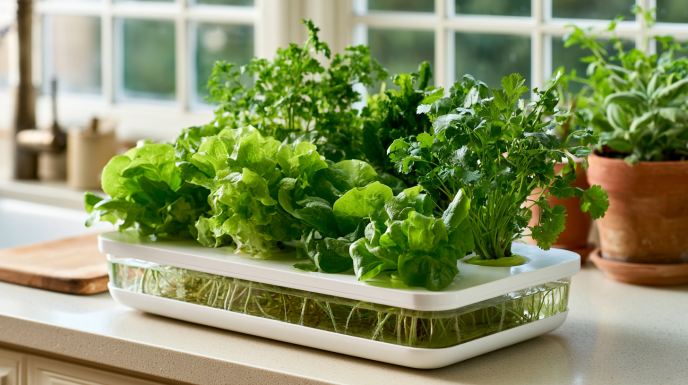
How to Grow Herbs Indoors: Fresh Flavor All Year Long
When the garden goes quiet for winter, there’s no reason your supply of fresh basil, mint and parsley has to stop. A windowsill, a few small pots and a little light are enough to keep herbs growing right in your kitchen all year round. An indoor herb garden is one of the most rewarding projects for a small space: it’s inexpensive to start, saves money on supermarket packets, and puts fresh flavour an arm’s reach from the chopping board. Here’s how to make it work.
Why grow herbs indoors
Herbs are the ideal indoor crop because most of them are compact, forgiving and quick to reward you. Unlike fruiting vegetables that need lots of light and space to produce, leafy herbs give you something useful within weeks, and the more you pick, the more they grow. Growing them inside means fresh flavour in the depths of winter, no wasted bunches wilting in the fridge, and a little living greenery brightening the kitchen.
For small-space gardeners, an indoor herb garden is also a way to keep growing when outdoor room runs out. A single sunny sill can hold half a dozen pots, and a narrow shelf near a window can hold even more.
The best herbs for indoor growing
Some herbs take to indoor life far better than others, so start with the reliable ones. Chives, mint, parsley, basil and coriander all grow happily in pots on a bright sill. Mint is practically unstoppable and best kept in its own pot so it doesn’t crowd everything else. Basil loves warmth and good light, making a kitchen windowsill its natural home.
Woody Mediterranean herbs like rosemary, thyme and oregano can also be grown indoors, though they need the brightest spot you have and dislike being overwatered. If you’re just beginning, a trio of chives, parsley and mint is almost foolproof and covers a huge range of everyday cooking.
Choosing pots and position
Any container works as long as it has drainage holes, because soggy roots are the fastest way to kill an indoor herb. Pots around four to six inches across suit most herbs, and a matching saucer underneath protects your sill. Terracotta is attractive and breathable, while plastic holds moisture a little longer if you tend to forget watering.
Light is the deciding factor indoors. A south or west-facing windowsill that gets at least six hours of sun is ideal. If your home is short on bright windows — a common problem in winter — a simple LED grow light makes all the difference, giving herbs the hours of light they need to stay compact and productive rather than pale and leggy.
Soil, planting and feeding
Use a good-quality peat-free potting compost rather than garden soil, which is too heavy and may bring pests indoors. Fill each pot, settle your young plant or sow seeds according to the packet, and water lightly to begin. If you’re starting from seed, sow a few more than you need and thin out the weakest seedlings so the strongest have room to flourish.
Indoor herbs in pots gradually use up the nutrients in their compost, so a regular feed keeps them lush. Feed every few weeks during active growth with a diluted liquid fertiliser; the same principles that apply to edible container crops are covered in our guide to feeding container vegetables. Go easy, though — over-fed herbs grow fast but lose some of their concentrated flavour.
Watering without drowning them
More indoor herbs die from too much water than too little. Check the compost before watering by pushing a finger an inch below the surface; water only when it feels dry, then water thoroughly and let the excess drain away. Never leave pots standing in a saucer of water. Herbs on a warm, sunny sill will need more frequent watering than those in a cooler room, and most need a little less in winter when growth slows.
Harvesting to keep plants productive
Regular harvesting is the secret to bushy, long-lived herbs. Pinch or snip from the top of each stem rather than stripping lower leaves, and always cut just above a pair of leaves, which encourages the plant to branch and grow fuller. For leafy herbs like basil, removing the growing tips also delays flowering, and once an herb flowers its leaves often turn bitter. Never take more than about a third of the plant at once so it has the strength to recover.
Keeping herbs happy through winter
Short winter days are the biggest challenge for indoor herbs. Move pots to your brightest window, rotate them every few days so they grow evenly rather than leaning toward the light, and consider a grow light through the darkest weeks. Keep herbs away from cold draughts and the drying blast of radiators, both of which stress the plants. Growth will naturally slow in winter, so ease off on both water and feed until the days lengthen again.
Troubleshooting common issues
Pale, stretched, leggy growth almost always means not enough light — move the plant somewhere brighter or add a grow light. Yellowing leaves usually signal overwatering, so check that drainage and let the compost dry out more between drinks. If you spot tiny insects, isolate the affected pot and rinse the leaves; catching pests early keeps them from spreading to your other herbs.
Fresh flavour on tap
An indoor herb garden proves you don’t need a garden at all to grow something genuinely useful. With the right herbs, a bright spot and a sensible watering routine, a few small pots will keep your kitchen stocked with fresh flavour through every season of the year. Start with a couple of easy favourites, harvest them often, and let the collection grow from there. For more small-space growing ideas, browse our Grow Your Own section.