How to Grow Strawberries in Containers: Sweet Berries in Small Spaces
Few crops reward a small-space gardener like strawberries. They’re compact, they’re happy in pots, and there is nothing like picking a warm, sun-ripened berry from a container right outside your door. You don’t need a garden bed or even much room — a balcony rail, a sunny step or a hanging basket is enough. Here’s how to grow strawberries in containers and get a genuinely sweet harvest from the smallest of spaces.
Why Strawberries Love Containers
Strawberries have shallow roots and a naturally spreading habit, which makes them almost purpose-built for pots. Growing them in containers also keeps the fruit off wet soil, away from many slugs, and easy to protect from birds. You get better drainage, warmer roots in spring, and the freedom to move plants into the sunniest spot as the season shifts — all advantages a fixed garden bed can’t match.
Choosing the Right Container
Almost anything with drainage holes will work: terracotta pots, plastic tubs, window boxes, hanging baskets and purpose-made strawberry planters with side pockets. Aim for a container at least 20 cm deep and give each plant roughly 15 to 20 cm of space. A standard 30 cm pot comfortably holds three plants, while a long window box can take a neat row.
Hanging baskets deserve a special mention — trailing strawberries spilling over the edge look beautiful and keep the fruit clean and out of reach of ground pests. Whatever you choose, make sure water can escape freely; strawberries hate sitting in soggy compost.
The Best Soil and Position
Fill containers with a good quality peat-free multipurpose compost, ideally mixed with a little added grit or perlite to keep it free-draining. Strawberries prefer slightly acidic soil, so a compost blended for fruit or ericaceous plants gives them a helpful edge, though ordinary compost works well too.
Sun is the single biggest factor in sweetness. Give your pots at least six hours of direct sun a day — the more light the plants get, the sweeter and more plentiful the fruit. A south- or west-facing balcony, patio or windowsill is ideal. If you’re already growing your own fruit and vegetables in containers, place strawberries in your brightest spot.
Choosing Your Strawberry Type
There are two main types worth knowing. Summer-fruiting (June-bearing) varieties give one big flush of fruit, usually in early summer, and are perfect if you want a glut for jam or freezing. Everbearing and day-neutral varieties produce smaller batches steadily from early summer into autumn, which suits container growers who want a handful of fresh berries at a time. For a long, continuous season on a small patio, an everbearing variety is often the best choice.
Planting Your Strawberries
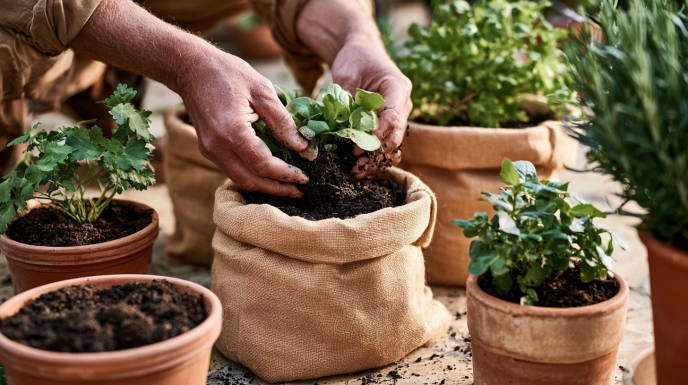
Set each plant so the crown — the point where the leaves meet the roots — sits right at the soil surface. Planting too deep rots the crown, while planting too shallow dries out the roots. Firm the compost gently around each plant, water it in well, and leave a small gap below the rim of the pot so watering doesn’t wash soil over the edge.
Spring and early autumn are the best planting times. Autumn-planted strawberries settle their roots over winter and often crop more strongly the following summer.
Watering and Feeding
Containers dry out fast, so consistent watering is the key to plump, sweet berries. Check daily in warm weather and water whenever the top couple of centimetres of compost feel dry, aiming at the soil rather than the leaves to avoid rot and mildew. Try not to let pots swing between bone-dry and waterlogged, as erratic watering leads to small, misshapen fruit.
Once flowers appear, feed every one to two weeks with a high-potassium liquid feed — the same type sold for tomatoes works perfectly. This encourages flowering and fruiting rather than leafy growth. Much like growing figs in pots, a steady feeding routine makes all the difference to the harvest.
Encouraging More Fruit
Strawberry plants send out long runners with baby plantlets on the ends. Snipping most of these off directs the plant’s energy into fruit rather than reproduction, giving you a bigger harvest. If you’d like free new plants, peg a couple of runners into small pots of compost, let them root, then cut them free — an easy way to expand your strawberry patch at no cost.
Pinch off the first flush of flowers on newly planted strawberries so the plant builds strong roots before fruiting. It feels harsh, but it pays off in stronger plants and better crops.
Protecting Your Berries
Birds adore ripe strawberries as much as we do. Drape netting over pots as the fruit begins to colour, or grow in hanging baskets where berries are harder to reach. Tuck a little straw or a mulch mat under low-growing fruit to keep it clean and dry. Watch for grey mould in damp weather and remove any spoiled berries promptly to stop it spreading.
Harvesting and Beyond
Pick strawberries when they’re fully red all over, ideally in the warmth of the day when they’re at their sweetest. Harvest with a little of the stalk attached and eat them soon after — homegrown berries don’t store like shop-bought ones, and that’s part of their charm.
Most container strawberries crop well for two or three years before slowing down, so refresh a few plants each season from runners. With a sunny spot, a decent pot and a little regular care, you’ll enjoy sweet, homegrown strawberries from a space no bigger than a doormat. Pair them with other small-space garden ideas and even the tiniest balcony becomes productive.