Best Grow Lights for Indoor and Apartment Gardens
This post contains affiliate links. As an Amazon Associate we earn from qualifying purchases, at no extra cost to you.
Not every home comes with a bright, south-facing window. Many apartments get limited natural light — north-facing rooms, windows blocked by neighbouring buildings, or long winters that reduce daylight to just a few hours a day. A grow light solves all of this, giving your plants the light they need to thrive regardless of where you put them. Here’s a practical, beginner-friendly guide to choosing the right one for an indoor or apartment garden.
Why Plants Need the Right Light
Light is food for plants. Through photosynthesis, plants convert light energy into the sugars that fuel their growth. Without enough light, plants can’t make enough food — and the results are visible: stems grow long and weak as the plant stretches toward any available light source, leaves turn pale or yellow, growth slows, and plants become vulnerable to pests and disease. For herbs and vegetables, poor light means poor flavour and minimal harvests. A grow light provides consistent, adequate light energy, regardless of season or window orientation.
What “Full Spectrum” Means and Why It Matters
Natural sunlight contains the full range of light wavelengths. Plants use primarily the blue end of the spectrum (around 400–500nm) for leafy, vegetative growth, and the red end (around 600–700nm) for flowering and fruiting. Early grow lights only emitted specific wavelengths, giving plants a red or purple glow. Modern full-spectrum LED grow lights produce light across the entire visible spectrum, closely mimicking natural daylight — this is what you want for herbs, leafy greens, and houseplants. “Full spectrum” on a product label means the light covers all the wavelengths plants need for healthy growth from seedling to harvest.
Types of Grow Lights for Home Use
Clip-On and Gooseneck LED Lights
Small, flexible lights that attach to a pot, shelf edge, or desk. Perfect for a single plant or a small group of herbs on a counter. The gooseneck arm lets you position the light exactly where you need it and adjust as plants grow. Inexpensive ($15–$40) and require no installation. The most accessible starting point for beginners.
Panel and Bar LED Grow Lights
Flat panels or long bar lights that hang or mount above a shelf or growing area. Better coverage than clip-ons, making them ideal for multiple plants or a dedicated growing shelf. Available in a huge range of sizes and outputs. Many include timers and dimmer functions. Mid-range cost ($30–$100 for home-scale panels).
LED Grow Light Stands
A self-contained unit with a built-in stand and one or more adjustable light bars. No installation needed — just place it wherever you want. Excellent for a dedicated herb or seedling station. Typically $50–$150.
Fluorescent Tube Lights (T5/T8)
An older technology but still effective and affordable for seedlings and herbs. Less energy-efficient than LEDs and produce more heat, but widely available and inexpensive. Good for longer shelving setups where you need to light a row of plants evenly.
What to Look for When Buying
- Full spectrum rating: Confirmed full spectrum, ideally with a colour temperature between 5000K–6500K (daylight range) for vegetative growth, or a combined red/blue/full spectrum for versatility.
- Wattage and coverage area: The product description should state how many square feet the light covers at what distance. Match this to your actual growing space.
- Built-in timer: Most plants need 12–16 hours of light per day. An automatic timer means you never forget and never accidentally leave lights on for 24 hours (which stresses plants).
- Adjustable height: As plants grow, the light needs to move up. Adjustable arms, hanging cables, or a ratchet suspension system make this easy.
- Dimmer function: Useful for adjusting intensity to different plant types — seedlings need less intensity than mature herbs.
- Energy efficiency: LEDs are very efficient. A 20–45 watt LED typically provides enough light for a small growing shelf and costs only a few dollars per month to run.
How to Position Your Grow Light
Position matters as much as the light itself. Too far away and plants don’t receive enough intensity; too close and you risk heat or light stress. General guidelines for LEDs:
- Seedlings: 4–6 inches above the tray
- Herbs and leafy greens: 6–12 inches above the canopy
- Fruiting plants (tomatoes, peppers): 12–18 inches
Raise the light as plants grow to maintain a consistent distance. If plants look leggy and pale, move the light closer. If leaf tips look burnt or bleached, move it further away.
How Many Hours Per Day?
Most plants grown indoors under artificial light need 12–16 hours of light per day with 8–12 hours of darkness. Darkness is not optional — plants need a rest period for certain metabolic processes, and some (particularly flowering plants) use the dark period to measure day length and time their flowering. Use the built-in timer or a plug-in timer to automate the schedule. A simple 14 hours on / 10 hours off schedule works well for most herbs and greens.
Best Plants to Grow Under Grow Lights
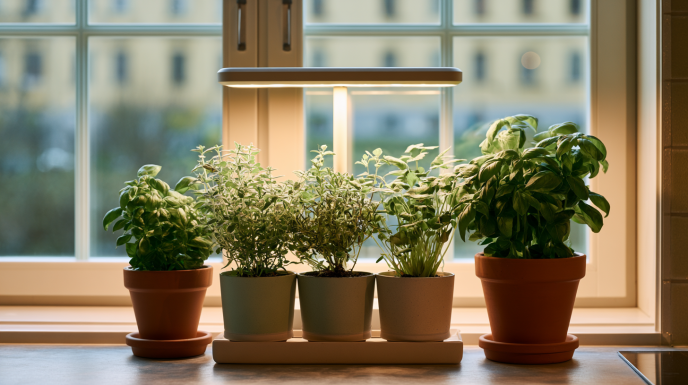
- Herbs: Basil, parsley, cilantro, mint, chives, and thyme all thrive under grow lights and are the most practical choice for a kitchen counter setup.
- Salad greens: Lettuce, spinach, arugula, and microgreens grow quickly and produce well under full-spectrum LEDs.
- Seedlings: Start vegetable and flower seeds indoors under grow lights 6–8 weeks before your last frost date, then transfer outside.
- Houseplants in dark rooms: Many tropical houseplants tolerate low light but genuinely thrive with a few extra hours of grow light per day, especially in winter.
- Succulents: In rooms without adequate natural light, a grow light prevents the stretching and pallor that comes from insufficient sun.
Are Grow Lights Worth the Investment?
For anyone without adequate natural light, absolutely. A quality LED grow light costs $25–$80 for a home-scale setup and runs for 50,000+ hours before needing replacement. The electricity cost is minimal — a 30-watt LED running 14 hours a day adds roughly $1.50–$2 to your monthly electricity bill. In return, you get fresh herbs and greens year-round, the ability to start seeds indoors, and plants that are actually healthy rather than limping toward the nearest window. Start with one clip-on or small panel over your herbs, and see how different your plants look within two weeks.