Deck Tiles for Balconies and Small Patios: The Easiest DIY Floor Makeover
Of all the surfaces in a small outdoor space, the floor is the one we forgive the least. You can distract from a plain wall with climbing plants and soften a dull corner with pots, but a cracked concrete slab or a grey builder-grade balcony floor drags the whole space down no matter what you put on top of it. The traditional fixes — pouring new concrete, laying pavers, building a deck — are expensive, disruptive, and usually impossible for renters. Interlocking deck tiles are the loophole: a genuinely good-looking floor you can lay in an afternoon with no tools, no glue, and no permission from anyone.
What Are Interlocking Deck Tiles?
Deck tiles are square panels, most commonly 12×12 inches (30×30 cm), with a surface layer of wood, composite, or stone mounted on a plastic grid base. The bases click together like giant puzzle pieces, and the grid lifts the surface slightly off the ground so rainwater drains straight through and away underneath. That drainage detail is what makes them so well suited to balconies, where standing water is both a nuisance and a hazard.
Because nothing is fixed down, the whole floor is reversible. Renters can lift the tiles and take them to the next apartment; homeowners can pull up a section to check the surface beneath. It is hard to overstate how rare that combination of polish and impermanence is in outdoor flooring.
Choosing Your Material
Real wood tiles, usually acacia or eucalyptus, are the most popular and arguably the most beautiful. They cost roughly $2.50 to $5 per square foot, feel warm underfoot, and silver gracefully with age — or keep their honey tone with an annual coat of decking oil. Their one demand is that light maintenance; skip it and they will still function, just weather faster.
Composite tiles blend wood fibre and recycled plastic for a wood look with zero upkeep. They run $4 to $8 per square foot and shrug off rain, spills, and sun. If you liked the logic in our guide to composite decking for small gardens but the full-deck project felt too big, composite tiles are the same benefits at snack size.
Stone and porcelain tiles — granite, slate, or ceramic surfaces on the same click-together base — cost $5 to $10 per square foot and give a sleek, contemporary look that suits urban balconies especially well. They are heavier, which is worth checking against a balcony’s load limits, but they are also the most durable of all.
Artificial grass tiles deserve a mention too: a few in a corner create a soft “lawn” for bare feet or a dog, and they mix surprisingly well with wood tiles to zone a space.
How Much Will It Cost?
A typical small balcony of about 30 square feet can be completely re-floored with wood tiles for $75 to $150. A compact 100-square-foot patio runs $250 to $500 in wood or $400 to $800 in composite. There are no other costs — no adhesive, no grout, no tool rental, no labour. Compare that with our pea gravel patio guide and you will find tiles cost a little more per square foot but demand far less digging, edging, and hauling.
Laying Deck Tiles: A 30-Minute Job
Preparation is almost embarrassingly simple. Sweep the surface clean and check it is reasonably flat and drains somewhere; the tiles will bridge small cracks and imperfections without complaint, but they cannot fix a floor that slopes toward the house or puddles badly.
Start laying from the corner you see most — usually the one by the door — and click tiles together row by row. Work with the grain direction in mind: running the slats away from the door makes a narrow balcony look longer, while a checkerboard pattern of alternating grain adds interest to a plain square patio. When you reach an edge that will not take a full tile, most brands sell matching reducer strips and corner pieces, or you can cut wood and composite tiles with a handsaw or jigsaw. Leave a small gap, about a quarter inch, around the perimeter so the floor can expand in summer heat.
That is the entire process. A 30-square-foot balcony takes well under an hour, most of it spent standing back and admiring.
Living With Them
Sweep occasionally, and once or twice a year lift a few tiles to clear any leaves that have collected in the drainage gap beneath — five minutes of maintenance that prevents blocked runoff. Wood tiles appreciate a wash and a coat of oil each spring. In regions with harsh winters, you can leave composite and stone tiles down year-round; wood tiles last longest if you stack and cover them, which the click-apart design makes trivially easy.
One caution for high-rise balconies: check your building’s rules and drainage arrangements before covering the floor, and never block the balcony’s drain outlet. The tiles’ open bases usually keep water flowing exactly as before, but it is worth confirming.
Finishing the Transformation
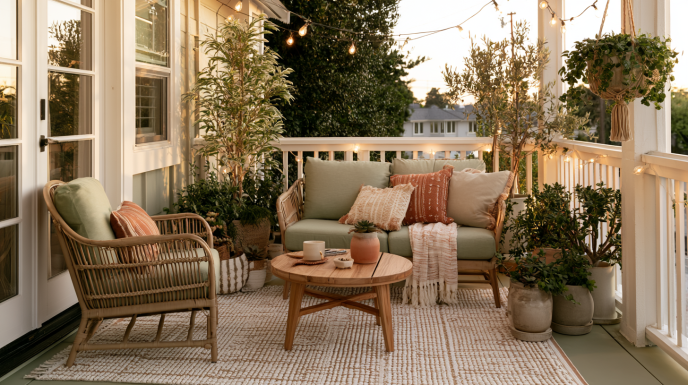
A new floor has a way of exposing everything else, in a good way — suddenly the space feels worth styling. A couple of large planters anchor the corners, a small rug over the tiles softens the seating zone, and screening plants or panels from our roundup of balcony privacy ideas turn the whole platform into a private outdoor room. If you are working through a bigger refresh, our budget patio makeover ideas pair naturally with a tile floor as the first step.
The Bottom Line
Few projects in small-space gardening deliver this much visual change for this little effort. Deck tiles are the rare upgrade that is fast, affordable, renter-friendly, and completely reversible — and once you have clicked the first row into place over a tired concrete floor, you will wonder why you waited so long to do it.