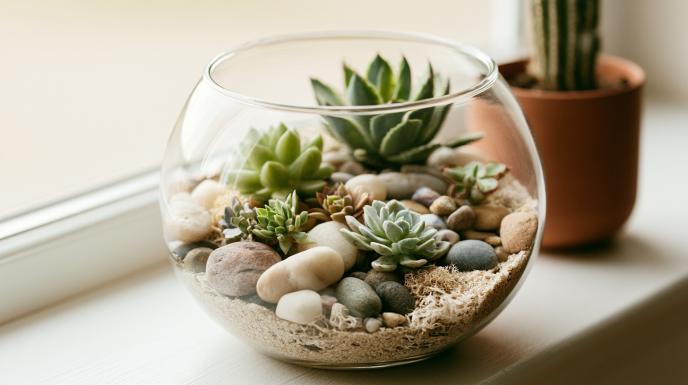
How to Make a Gnome Garden: A Whimsical Twist on the Fairy Garden
If a fairy garden is delicate and dreamlike, a gnome garden is its cheerful, mischievous cousin. Where fairies bring a sense of quiet enchantment, gnomes bring humour, warmth, and a touch of storybook nonsense: little bearded figures fishing by a pond, pushing a wheelbarrow, or snoozing under a toadstool. Building a gnome garden is one of the most joyful projects in miniature gardening, and because the whole scene fits inside a single container, it is perfect for a small patio, a balcony, or a sunny windowsill. Here is how to make a gnome garden that will make everyone who sees it smile.
What Makes a Gnome Garden Different
At its heart, a gnome garden uses the same techniques as any miniature garden: real living plants scaled down to look like trees and shrubs, tiny hardscaping for paths and patios, and characterful accessories to tell a story. The difference is all in the mood. Gnome gardens lean into playfulness. The colours are brighter, the figures are chunkier, and the scenes are often funny rather than romantic. A gnome caught mid-nap, a signpost pointing to nowhere, or a row of little gnome houses with round doors all capture that lighthearted spirit.
If you have never built a miniature scene before, it is worth reading through a general guide first, such as our walkthrough on how to build a fairy garden in a weekend, because the core steps carry straight over to gnomes.
Choosing Your Container
Almost anything can become the home for a gnome garden as long as it drains well. A wide, shallow bowl gives you the most room to design a scene and is the classic choice. A wooden half-barrel makes a rustic, woodland-feeling home that suits gnomes perfectly, while an old wheelbarrow or a weathered terracotta trough adds instant character. For a small space, even a large plant pot laid on its side to spill soil out like a tiny hillside can work beautifully.
Whatever you pick, make sure it has drainage holes. Gnomes may be tough little characters, but the real plants around them will rot in waterlogged soil. Add a shallow layer of gravel at the bottom and fill with a free-draining potting mix.
Picking the Right Miniature Plants
The plants are what turn a collection of ornaments into a believable little world. Look for slow-growing, small-leaved varieties that stay in scale. Miniature conifers make convincing evergreen trees, creeping thyme and baby’s tears form soft green lawns, and small succulents or sedums add sculptural interest that needs little watering. A tiny fern in a shady corner reads instantly as woodland undergrowth, the natural habitat of any self-respecting gnome.
Try to include a mix of heights so the scene has depth: something tall for a tree, something low and spreading for grass, and a few mid-height plants in between. For a full rundown of what works and what quickly outgrows a container, see our guide to the best miniature plants for tiny gardens.
Building the Scene Step by Step
Start by planting first and decorating second. Arrange your plants while still in their pots to test the layout, then plant them, leaving open areas of soil where paths, patios, and gnome activity will go. Firm everyone in gently and water lightly to settle the roots.
Next, add the hardscaping. Small pebbles make a winding path, flat stones become a patio or a stepping-stone trail, and a scoop of blue aquarium gravel or a small mirror can suggest a pond where a gnome sits fishing. These little details give your gnomes somewhere to be and something to do, which is what makes the scene feel alive. You can borrow plenty of ideas from our post on making fairy houses from natural materials, since the same twigs, bark, and stones make wonderful gnome dwellings too.
Adding the Gnomes and Finishing Touches
Now for the fun part. Resist the urge to crowd the scene with every gnome you own. A few well-placed characters tell a much better story than a dozen jammed together. Think about what your gnomes are doing: one might be tending a tiny vegetable patch, another leaning on a fence, a third fast asleep in a hammock strung between two miniature trees. Give them a reason to be where they are and the whole garden gains personality.
Finish with the small details that sell the illusion, such as a little sign, a miniature lantern, a wheelbarrow, or a scattering of moss to soften bare soil. Solar-powered miniature lights are a lovely addition if your gnome garden lives outdoors, glowing softly after dark and giving the scene a second life at night.
Caring for Your Gnome Garden
A gnome garden is low-maintenance, but not no-maintenance. Water when the top of the soil feels dry, taking care not to blast delicate plants or wash away your carefully placed paths; a small watering can with a fine rose or even a spray bottle works well. Snip back any plant that starts to overgrow its neighbours so the scene stays in scale, and turn the container occasionally so every side gets its share of light.
If your gnome garden lives indoors, give it the brightest windowsill you have and rotate it now and then. Outdoors, most miniature plants are happy in a spot with morning sun and afternoon shade. With a little care, your cheerful little world will keep its charm for years, and half the fun is rearranging the gnomes now and then to give them a brand-new adventure.